


tab
Our approach
Under the Development Strategy of JSC Samruk-Energy for 2024–2033, one of the Company’s strategic objectives is to reduce its net carbon footprint, while one of its key development priorities is the alignment of environmental (E), social (S), and governance (G) principles. The Company seeks to contribute to the development of the national economy by promoting renewable energy, minimizing atmospheric emissions, and improving ecosystems. The Company’s primary objective is not only to ensure resilience in a high-risk environment through effective forecasting and planning, but also to turn risks into opportunities and prepare for an uncertain future.
TThe key documents governing the implementation of sustainable development principles at JSC Samruk-Energy include the Sustainable Development Guidelines, the Corporate Governance Code, the Corporate Management System Policy, (covering quality management, occupational health and safety, environmental protection, energy efficiency, information security, fire and industrial safety, and anti-corruption and anti-fraud), the Human Resources Policy and other internal regulatory documents.
In accordance with its Corporate Management System Policy, JSC Samruk-Energy considers quality management, occupational health and safety, environmental protection, energy efficiency, information security, fire safety, and industrial safety to be interrelated priorities of its operations.
In accordance with the Corporate Governance Code of JSC Samruk-Energy, the Company adheres to the following sustainable development principles:
- openness
- accountability
- transparency
- ethical conduct
- respect for stakeholders’ interests;
- legality
- respect for human rights
- zero tolerance for corruption
- avoidance of conflicts of interest
- leading by example
JSC Samruk-Energy is implementing a climate risk management project in line with the TCFD recommendations (IFRS S2)
In 2025, JSC Samruk-Energy launched a project to implement international best practices in climate risk management and disclosure in accordance with the recommendations of the Task Force on Climate-related Financial Disclosures (TCFD) and IFRS S2.
The project is intended to enhance transparency and strengthen the confidence of investors, creditors, and other stakeholders, as well as to fulfil the Company’s commitments arising from its cooperation with international financial institutions.
Key project priorities:
- strengthening and advancing the climate agenda within the corporate governance system;
- refining scenario analysis of transition and physical climate risks, as well as pathways towards carbon neutrality;
- quantifying the impact of climate risks on the Company’s strategy and financial performance;
- developing practical methodologies for integrating climate risks into the management, planning, and reporting processes of JSC Samruk-Energy;
- preparing disclosures in accordance with international requirements.
Outcomes to be achieved through the project:
Strategy: assessment and revision of long-term decarbonization and carbon footprint reduction targets aligned with national and international commitments.
Governance: clarification of the roles and responsibilities of governing bodies and executive management in relation to climate governance, ensuring systematic oversight and monitoring.
Risks and Opportunities: scenario-based assessment of climate-related risks and opportunities and integration of the results into strategic and investment planning processes.
Metrics and Targets: supplementing climate-related disclosures with an assessment of their strategic, financial, and operational impacts.
Disclosure: Ppreparation of draft climate-related disclosures for inclusion in the Integrated Annual Report.
Expected results
The project will enable the Company to ensure alignment with international standards, enhance the transparency and effectiveness of climate risk management, and strengthen stakeholder confidence. The introduction of TCFD-aligned disclosures will contribute to the development of a sustainable business model that takes into account long-term climate challenges and the expectations of investors and other stakeholders.
tab
Sustainable development goals
“Samruk-Energy” JSC, while incorporating sustainable development principles into its business, is committed to 17 Sustainable Development Goals (hereinafter - SDG). The company recognizes that the environmental and social issues that each SDG addresses are relevant and influences any organization.
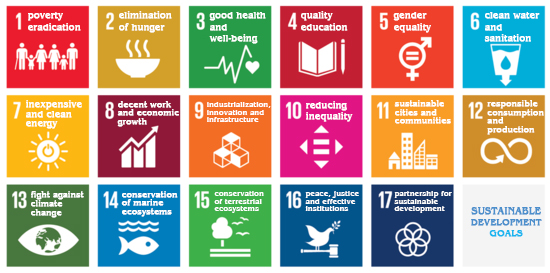
A detailed description about SDG applicable to the Company is presented on the company’s website in “To shareholders and investors” section, Annual Reports about the Company’s operating results.
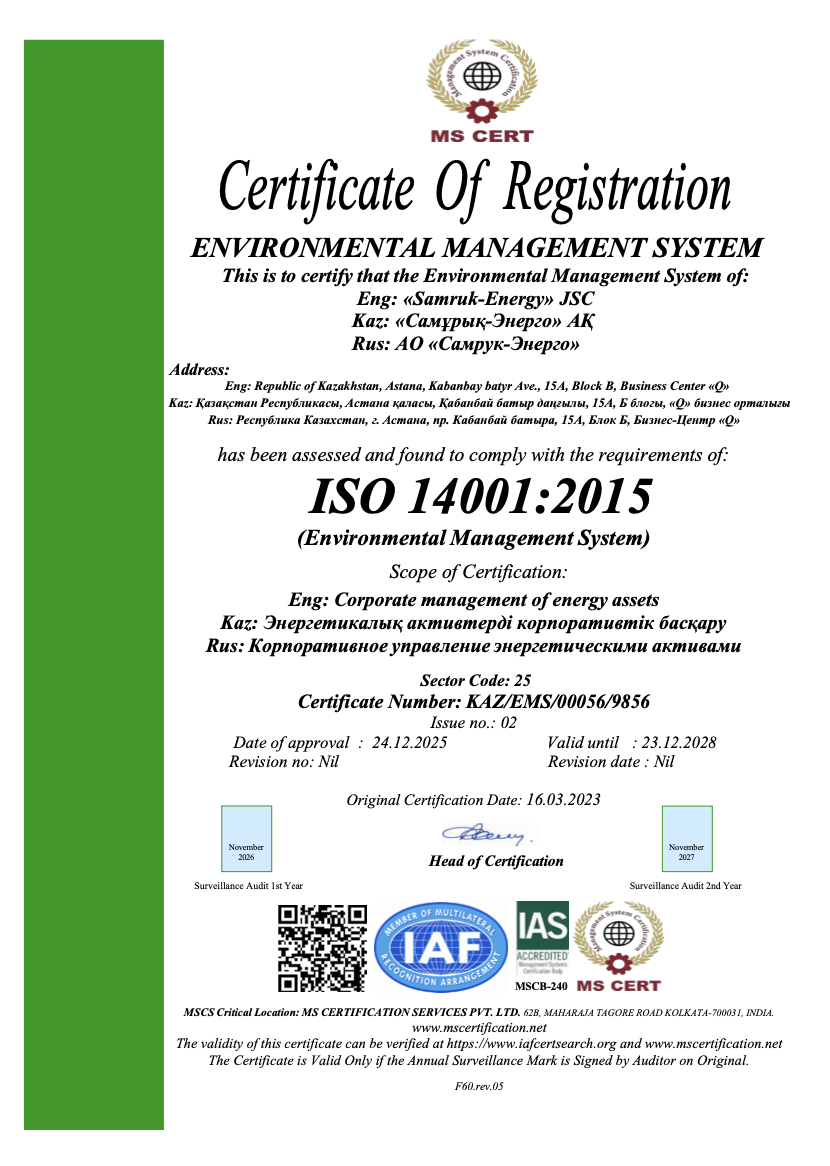
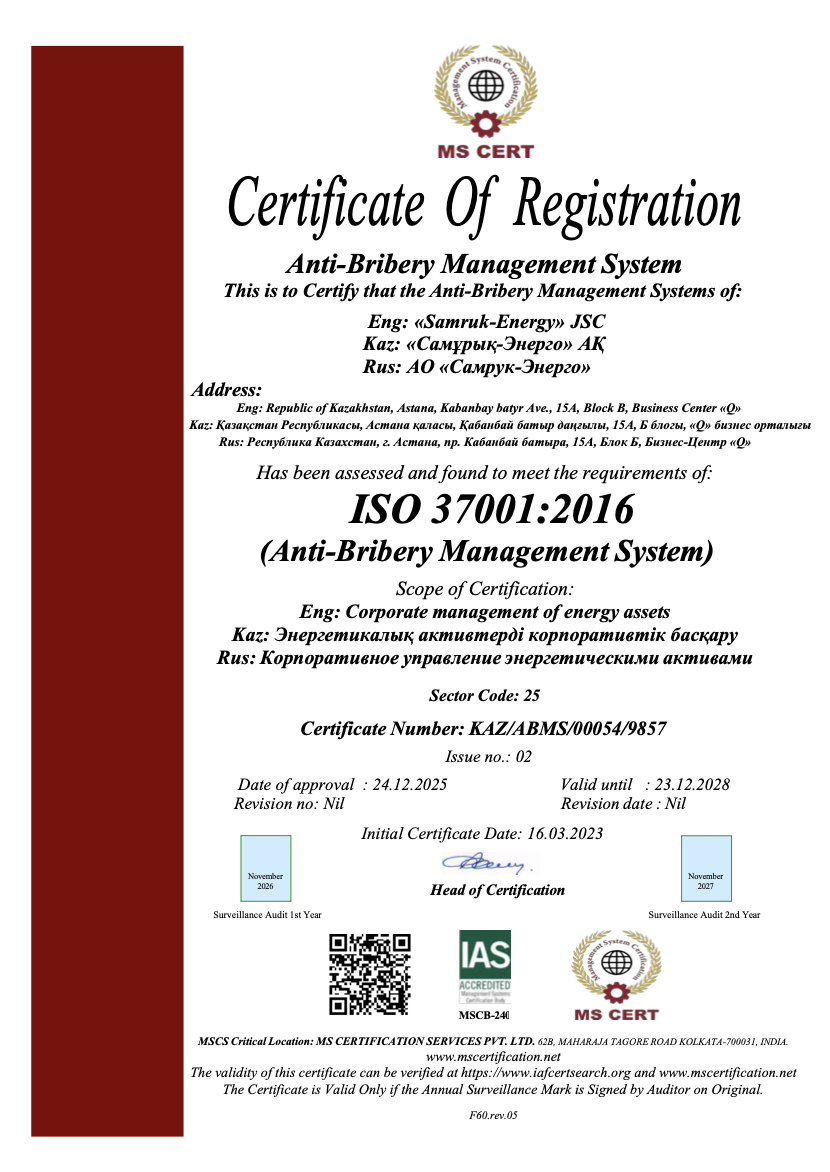
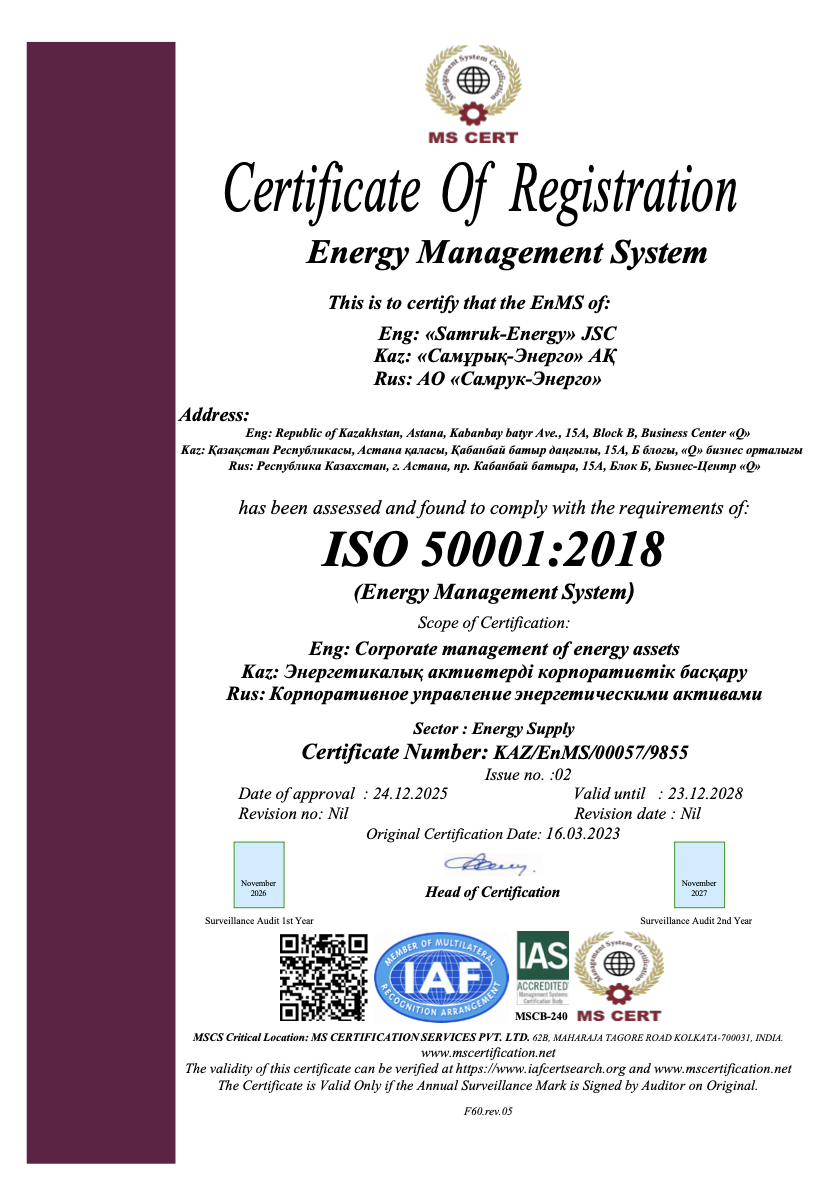
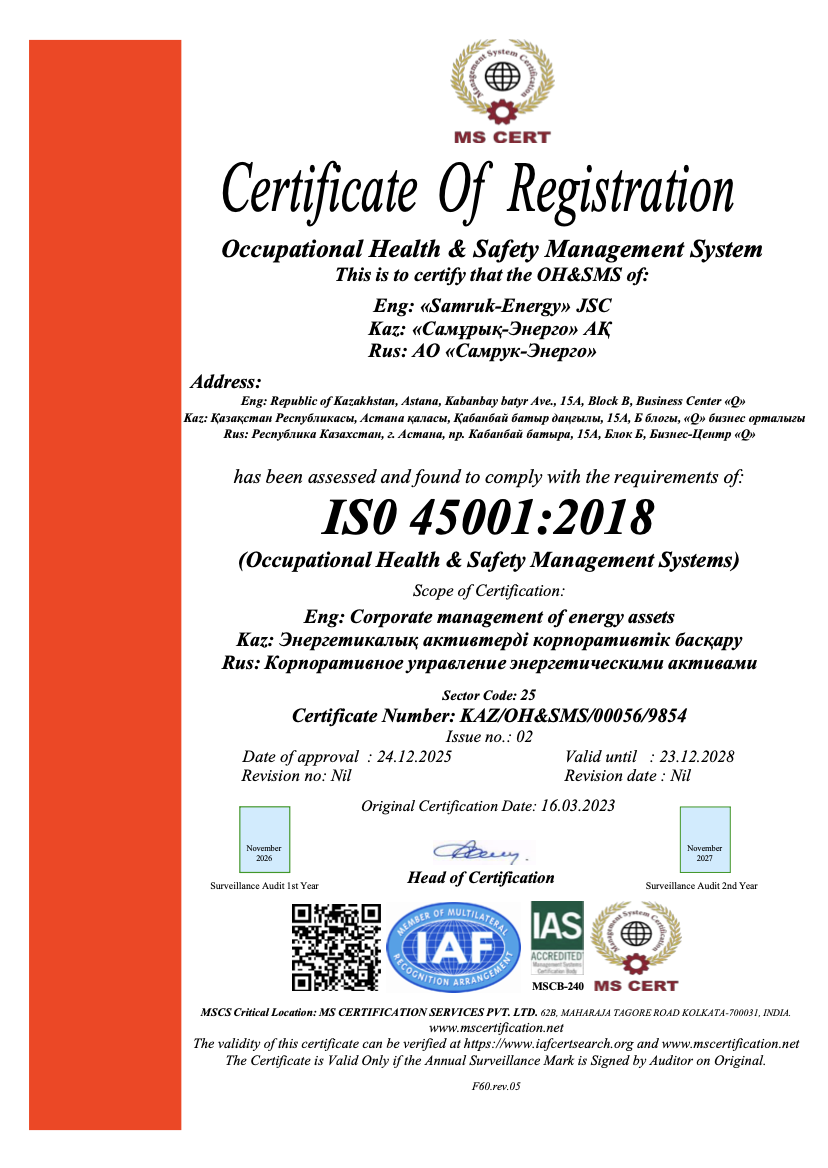
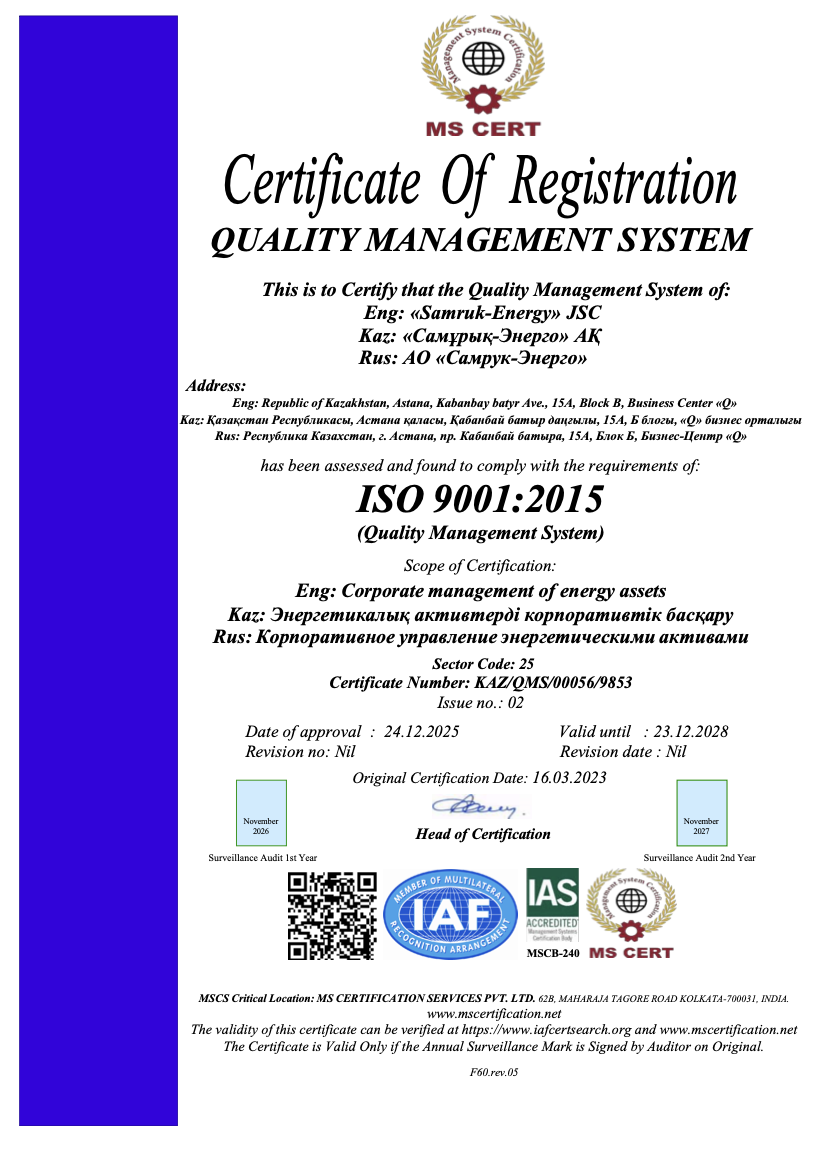
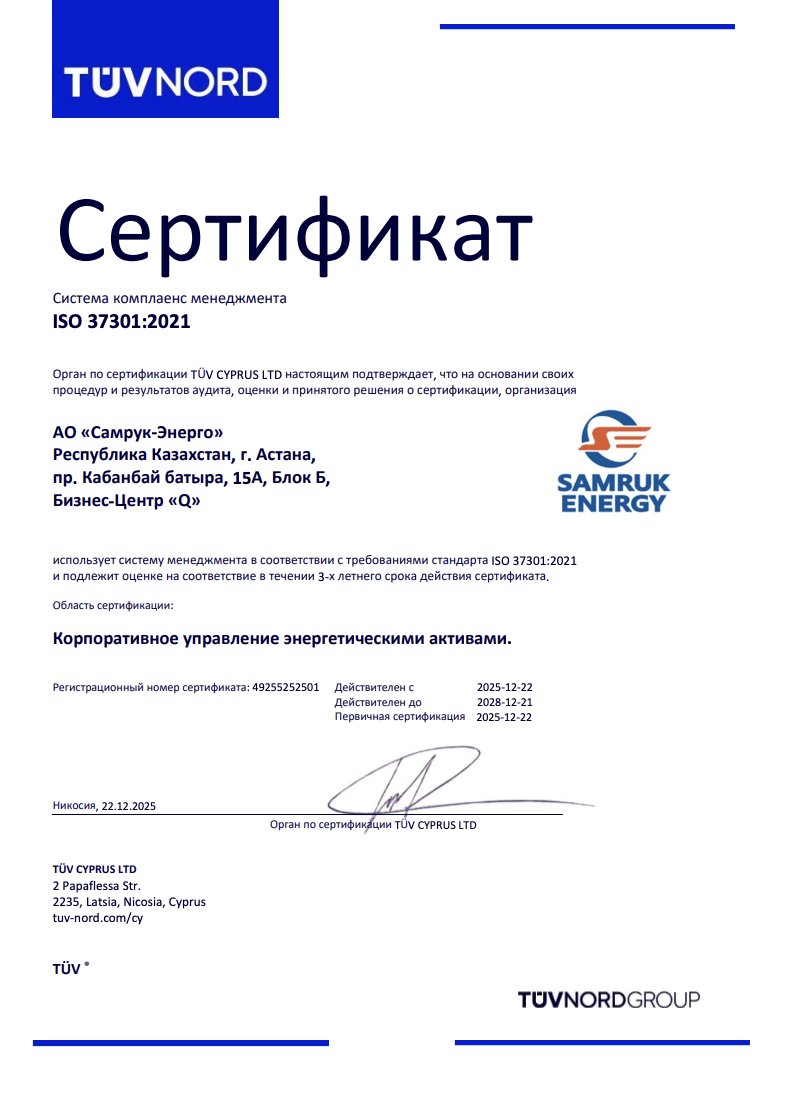
Certificates confirming compliance with the requirements of the following international standards: ISO 9001, ISO 14001, ISO 45001, ISO 50001, ISO 37001, ISO 37301.
In 2025, the corporate management system successfully passed an external surveillance audit for compliance with the international standards ISO 9001, ISO 14001, ISO 45001, ISO 50001 and ISO 37001.
These international standards apply to «Ekibastuz GRES-1 named after Bulat Nurzhanov LLP», «Station Ekibastuz GRES-2 JSC», «Almaty Electric Stations» JSC, Moynak HPP JSC named after U.D. Kantayev, «Samruk Green Energy» LLP, Alatau Zharyk Company JSC, Branch of «AZC» JSC – «EnergoSbyt», «Shardara Hydroelectric Power Plant» JSC, First Wind Power Plant LLP, «Ust-Kamenogorsk HPP» JSC, «Shulbinsk HPP» JSC, «Energy Solutions Center» LLP (Ekibastuz CHP), as well as the corporate center of «Samruk-Energy» JSC.
In 2025, a certificate of compliance with the requirements of the international standard ISO 37301 was also obtained, covering the corporate center of «Samruk-Energy» JSC.
tab1
"Samruk-Energy" JSC, as one of Kazakhstan’s key energy companies, considers environmental safety one of its priorities. In its operations, the Company is guided by the requirements of national legislation, the provisions of the ISO 14001 international standard, as well as best practices in sustainable development aimed at reducing its environmental impact.
The Company’s environmental protection efforts focus on the following areas:
- ● preventing and reducing adverse environmental impacts, including improving air quality, responsible waste management and the sustainable management of water resources;
- ● participating in measures to address climate change;
- ● maintaining and efficiently using energy resources;
- ● conducting comprehensive environmental monitoring and assessing environmental impacts;
- ● protecting natural landscapes and conserving biodiversity.
To ensure effective control and management of environmental aspects, the Company has approved the following key documents:
- ● Corporate management system policy;
- ● Corporate Standard on environmental protection management in "Samruk-Energy" JSC Group of companies;
- ● Guidelines on environmental emergencies and response;
- ● Environmental safety program of "Samruk-Energy" JSC Group of companies.
Environmental safety matters are integrated into all levels of corporate governance. The Group’s management is responsible for complying with environmental commitments, meeting targets and achieving the relevant performance indicators. The Board of Directors approves strategic documents and policies in the field of environmental protection. The Energy Efficiency, Innovative Development and Environmental Safety Department serves as the responsible unit, ensuring the implementation of environmental initiatives. Specialized units operate within subsidiaries and affiliates and are responsible for implementing environmental protection policies and strategies, as well as monitoring compliance with environmental requirements by partners and contractors.
Environmental safety program of "Samruk-Energy" JSC Group of Companies
To implement the Group’s key strategic objectives through 2033, in 2024 the Board of Directors approved the Environmental Safety Program of the Company’s Group. The Program is the Group’s primary instrument for planning environmental protection activities and defines objectives and measures aimed at achieving environmental sustainability and enhancing social responsibility.
The Program is long-term and target-oriented and serves as the basis for incorporating the measures it provides for into the Group’s long-term, medium-term and operational planning documents. The overall implementation period of the Program is from 2024 to 2033. The actual results achieved against the targets for 2025 are presented in the table below.
Environmental protection Action Plan of Samruk-Energy JSC Group of Companies for 2024–2027
|
Activity description |
Unit of measurement |
2024 (actual) |
2025 (target) |
2025 (actual) |
|
Reduction of pollutant emissions |
||||
|
Increase in electricity generation by renewable energy facilities |
billion kWh |
7,46 |
5,94 |
6,79 |
|
Implementation of an automated emissions monitoring system (NOx, SO2, CO and dust) for atmospheric emissions |
Number of enterprises: % |
57 |
86 |
71 |
|
Conversion of Almaty thermal power plants to gas |
thousand tonnes of pollutants |
46,4 |
48,1 |
46,5 |
|
Increase in the efficiency of electrostatic precipitators through maintenance and repair works |
% |
99,4 |
99,5 |
99,5 |
|
Efficient management of water resources |
||||
|
Reduction in water intake per unit of output |
m³/kWh |
0,77 (2,01) |
0,65 |
0,63 (1,77) |
|
Compliance with water quality requirements, including wastewater |
% |
100 |
100 |
100 |
|
Repair of hydro-ash removal systems, pipelines and pumping equipment at treatment facilities |
% |
100 |
100 |
100 |
|
Safe waste management |
||||
|
Transfer of hazardous production waste to specialized organizations |
Number of enterprises: % |
100 |
100 |
100 |
|
Reclamation of ash ponds at waste storage facilities (ash disposal sites) |
% |
35 |
100 |
73 |
|
Placement of overburden rock in temporary internal dumps |
million m³ |
28,0 |
26,0 |
30,8 |
|
Sale of dry fly ash |
tonnes |
14 461 |
Not less than 11 000 |
4 271,6 |
|
Transfer of ash and slag waste for secondary use |
tonnes |
4 116 |
5 000 |
53 656 |
|
Biodiversity conservation |
||||
|
Environmental impact assessment with the participation of local residents and communities during the implementation of new projects |
Number of enterprises: % |
100 |
100 |
100 |
|
Landscaping of the sanitary protection zone of the enterprise |
% |
100 |
100 |
100 |
|
Weekly monitoring of bird collisions with wind turbines |
Number of wind power plants: % |
100 |
100 |
100 |
|
Weekly inspection of the water surface to identify fish mortality |
Number of hydropower plants: % |
100 |
100 |
100 |
|
Environmental impact assessment with the participation of local residents and communities during the implementation of new projects |
billion kWh |
100 |
100 |
66,7 |
The Company consistently implements measures aimed at achieving the established targets. At the end of 2025, the targets set for 13 of the 17 measures provided for under the Environmental Safety Program (ESP) had been achieved. The ESP implementation rate for the reporting period was 76.5%.
The targets for four measures were not achieved, with completion of three of these measures expected in 2026:
- ● “Implementation of an automated emissions monitoring system (NOX, SO2, CO and dust) for emissions to the atmosphere” — actual performance for 2025 was 71% against a target of 86%. The automated monitoring system (AMS) has been installed at five of the seven stations (TPP-3 — 2027). Due to the lack of funding in 2025, the AMS was not installed at Ekibastuz Thermal Power Plant. A source of funding has now been identified (the Pavlodar Region regional budget). Together with the Department of Housing and Utilities of the City of Ekibastuz, a Roadmap for the installation of the AMS has been developed and approved and agreed with the Ministry of Ecology and Natural Resources, under which installation is scheduled for completion in 2026;
- ● “Reclamation of ash beaches at a waste storage facility (ash disposal site)” — actual performance was 73% (45/62 ha) against a target of 100%. The work was not completed by the contractor at ESDPP-2 JSC. The contractor cited adverse weather conditions preventing the work from being performed safely as the reasons. Completion of the work is scheduled for 2026.
- ● “Fish stock replenishment (restocking)” — the measure was completed at two of the three hydropower plants (66.7% against a target of 100%). At Shulbinsk HPP JSC, due to the contractor’s failure to fulfill its contractual obligations, fish stocking is scheduled for 2026, taking into account the volume attributable to 2025.
- ● “Sale of dry fly ash” — the actual volume of dry fly ash sold at ESDPP-2 JSC was 4,271.6 tonnes against a target of at least 11,000 tonnes. The main factor behind the failure to achieve the target was the lack of sustained demand. Efforts to identify potential buyers are ongoing.
Precautionary principles
When planning and implementing projects, Samruk-Energy JSC pays particular attention to assessing potential consequences and environmental risks. In accordance with corporate standards, each project undergoes a thorough risk analysis, including an assessment of environmental impacts and potential long-term consequences. Risk assessments are conducted with the involvement of qualified experts, in accordance with internal regulations governing investment project risk management.
As part of the implementation of the environmental policy, both routine and capital measures are carried out to minimize environmental risks. Their effectiveness is continuously monitored, and the tools used to assess and manage environmental risks are further improved.
To increase employees’ motivation and accountability for implementing measures to reduce environmental risks, Samruk-Energy JSC has introduced environmental key performance indicators, enabling more effective management of environmental safety and achievement of the established targets.
Monitoring and transparency
To maintain a high level of environmental responsibility, the Company regularly provides detailed reports on its environmental protection activities. Quarterly reports are submitted to members of the Management Board and the relevant Committee on Security, Occupational Health and Environmental Protection, and annually to the Board of Directors of Samruk-Energy JSC in the form of the “Report on Environmental Protection Activities for the Reporting Period.”
In 2025, the Group of companies of Samruk-Energy JSC successfully passed an external recertification audit confirming the corporate management system’s compliance with the requirements of the international standards ISO 9001, ISO 14001, ISO 45001, ISO 50001 and ISO 37001.
In 2025, 78% of the planned environmental protection measures were implemented, covering air, water and land resources, flora, fauna and biodiversity.
A key achievement was the implementation of an automated emissions monitoring system at Ekibastuz GRES-1 LLP ( hereafter -Ekibastuz SDPP-1), with data transmitted to the “National Environmental Monitoring Database and the Register of Emissions and Pollution of the Republic of Kazakhstan” every 20 minutes in online mode.
In addition, as part of the implementation of the Environmental Protection Action Plan of the Group of companies of Samruk-Energy JSC for 2025, a number of cultural, educational and environmental activities were held among the employees of subsidiaries and affiliates in connection with the celebration of World Environment Day on June 5. Key activities included:
- ● Employees of ESDPP-2 JSC organized environmental campaigns, including a children’s drawing competition on the theme “A Clean Planet Through Children’s Eyes,” an eco-art installation competition (creating art objects from recycled materials — plastic bottles, waste paper and old tires), as well as a “Greenest Office” competition;
- ● Environmental specialists from the production departments and specialists from the head office of Almaty Power Plants JSC (APP) held the “#Taza ozen – taza zhan degen soz” environmental campaign to clean up the area along the Prokhodnaya River in the Alma-Arasan Gorge, during which approximately 20 bags of waste were collected;
- ● At Ekibastuz SDPP-1 LLP, the “Zero Waste: Green Route” environmental campaign was held among station employees to foster an environmental culture and promote the principles of responsible waste management;
- ● At Bogatyr Komir LLP, a video and children’s drawing competition on the theme “World Environment Day” was organized;
- ● Various thematic events and campaigns were held at the enterprises of Energy Solutions Center LLP (Ekibastuz TPP), Alatau Zhylu Kompany JSC, Shardarinsk HPP JSC, Moynak HPP JSC, Ust-Kamenogorsk HPP JSC, Shulbinsk HPP JSC and PVES LLP, aimed at promoting careful treatment of nature and fostering environmental awareness among employees.
Participation of Samruk-Energy team in a citywide clean-up
As part of the nationwide environmental campaign “Taza Kazakhstan,” held in Astana in April 2025, the Samruk-Energy JSC team actively participated in a citywide clean-up. The main objective of the event was to raise awareness of environmental culture and the importance of protecting the environment.
Samruk-Energy employees actively participated in the event and contributed to landscaping the area at the intersection of S. Nurmagambetov Street and R. Koshkarbayev Avenue in Astana. The event made an important contribution to improving the city’s environmental conditions and further highlighted the Company’s commitment to sustainable development and environmental stewardship.
We maintain an ongoing dialogue with stakeholders on environmental protection issues. This enables us to monitor the effectiveness of decisions made and measures implemented, as well as keep environmental risks up to date.
In 2025, the Company held public hearings on two projects, which resulted in favorable conclusions.
Guided by the principle of transparency and accountability, Samruk-Energy JSC organizes meetings, press conferences and roundtable discussions to address environmental issues with representatives of the public, the media, volunteer organizations and non-profit organizations. These initiatives involve the Company’s top management, as well as representatives of the management of its subsidiaries.
Environmental protection expenditures
Under the Environmental Protection Action Plan for the Group of companies of Samruk-Energy JSC for 2025, as well as the Environmental Protection Action Plans of subsidiaries and affiliates for 2025 agreed with the authorized environmental protection authority, 78% of the planned environmental protection measures were implemented. KZT 23.2 billion was spent out of the KZT 29.4 billion budgeted. The main measures aimed at reducing environmental impact and improving environmental performance included:
- ● Equipment modernization: repair of boiler burner units and reconstruction of electrostatic precipitators to reduce dust emissions.
- ● Optimization of industrial processes: repair of the process water recirculation system (baghouse system) and maintenance of dust and gas treatment units.
- ● Systemic measures to reduce pollution: implementation of automated monitoring of pollutant emissions and dust suppression at ash beaches at the waste storage facility (ash disposal site).
- ● Responsible waste management: waste disposal and placement of overburden rock in temporary internal dumps, which reduced the volume of overburden rock placed in external dumps by 75.9 million tonnes.
- ● Water conservation and wastewater treatment: maintenance of systems for the collection and treatment of stormwater and meltwater.
- ● Landscaping and site improvement: expansion of green areas at enterprise sites.
- ● Improving equipment reliability: repair of equipment assemblies and adjustment of equipment operating modes in accordance with operating charts.
Samruk-Energy JSC investments in environmental protection measures, KZT billion
|
Indicator |
2023 |
2024 |
2025 |
|
Expenditures on environmental protection measures |
24,4 |
14,4 |
23,2 |
We also paid more than KZT 9 billion in statutory payments for emissions (tax).
Environmental benchmarking
Environmental benchmarking is a tool for assessing and managing the environmental performance of Samruk-Energy JSC by comparing its own performance indicators with those of leading companies in the industry. This approach promotes the adoption of international best practices in environmental management and sustainable development. The current analysis uses publicly available data for 2022–2025.
The following indicators were selected for benchmarking:
- freshwater use for technological and domestic needs;
- direct (Scope 1) and indirect (Scope 2) greenhouse gas emissions.
To identify environmental trends, the largest companies in Kazakhstan’s and the global energy sector were analyzed, namely:
- ERG;
- CAEPCO JSC;
- KKS LLP;
- Enel Group;
- Inter RAO PJSC;
- RusHydro PJSC.
Operating indicators*
|
Сompany |
2023 |
2024 |
2025 |
|||
|
Electricity generation, billion kWh |
Installed capacity, GW |
Electricity generation, billion kWh |
Installed capacity, GW |
Electricity generation, billion kWh |
Installed capacity, GW |
|
|
Samruk-Energy JSC |
35,33 |
6,275 |
39,77 |
7,345 |
40,44 |
7,885 |
|
ERG |
19,16 |
3,387 |
18,87 |
3,387 |
18,68 |
3,525 |
|
CAEPCO JSC |
5,59 |
1,318 |
5,75 |
1,306 |
5,78 |
1,306 |
|
KKS LLP |
6,11 |
1,067 |
6,24 |
1,067 |
5,76 |
1,067 |
|
Enel Group |
207,3 |
81,4 |
191,8 |
80,9 |
186,1 |
87,0 |
|
Inter RAO PJSC |
126,7 |
30,8 |
131,6 |
31,2 |
128,1 |
31,2 |
|
RusHydro PJSC |
140,9 |
38,5 |
144,8 |
38,6 |
142,5 |
38,7 |
* The indicators are based on information from publicly available Internet sources.
Greenhouse gas emissions (Scope 1,2)
|
Company |
2023 |
2024 |
2025 |
|||
|
Direct GHG emissions, million tonnes CO₂e (Scope 1) |
Indirect GHG emissions, million tonnes CO₂e (Scope 2) |
Direct GHG emissions, million tonnes CO₂e (Scope 1) |
Indirect GHG emissions, million tonnes CO₂e (Scope 2) |
Direct GHG emissions, million tonnes CO₂e (Scope 1) |
Indirect GHG emissions, million tonnes CO₂e (Scope 2) |
|
|
Samruk-Energy JSC |
33,01 |
0,011 |
32,70 |
0,009 |
35,06 |
0,005 |
|
ERG (1) |
29,3 |
0,1 |
29,6 |
0,1 |
29,2 |
0,03 |
|
СAEPCO JSC (3) |
8,1 |
- (2) |
8,5 |
- (2) |
none |
none |
|
KKS LLP |
8,022 |
- (2) |
8,053 |
- (2) |
7,765 |
- (2) |
|
Enel Group (4) |
34,5 |
3,30 |
20,20 |
3,13 |
18,95 |
2,84 |
|
Inter RAO PJSC (5) |
75,643 |
- (2) |
78,135 |
- (2) |
76,52 |
- (2) |
|
RusHydro PJSC (4) |
32,05 |
- (2) |
38,491 |
- (2) |
40,466 |
0,282 |
(1) In addition to energy-generating assets, ERG has mining and processing assets; Scope 1 includes all types of operations.
(2) The companies did not disclose information on Scope 2 emissions.
(3) CAEC JSC discloses Scope 1 emissions only for CO₂.
(4) Enel Group and RusHydro PJSC generate energy using renewable energy facilities and hydropower plants, resulting in minimal GHG emissions.
(5) Gas-fired generation accounts for a significant share of the portfolio of Inter RAO PJSC (more than 83%), characterized by lower greenhouse gas emissions compared with coal-fired generation.
Freshwater intake, million m³
|
Company |
2023 |
2024 |
2025 |
|
Samruk-Energy JSC |
228,691 |
224,194 |
227,662 |
|
ERG (1) |
1 947 |
1 966 |
1 981 |
|
CAEPCO JSC (3) |
30,63 |
26,74 |
none |
|
KKS LLP |
66,95 |
72,19 |
79,64 |
|
Enel Group (4) |
55,0 |
43,4 |
46,8 |
|
Inter RAO PJSC (5) |
4 167 |
4 456 |
4 589 |
|
RusHydro PJSC (4) |
708,6 |
695,3 |
759,9 |
Intensity indicators
|
Company |
2023 |
2024 |
2025 |
|||
|
m³/thous. kWh |
tonnes CO₂e/thous. kWh |
m³/thous. kWh |
tonnes CO₂e/thous. kWh |
m³/thous. kWh |
tonnes CO₂e/thous. kWh |
|
|
Samruk-Energy JSC |
6,47 |
0,93 |
5,64 |
0,82 |
5,63 |
0,87 |
|
ERG (1) |
101,62 |
1,53 |
104,19 |
1,57 |
106,05 |
1,56 |
|
CAEPCO JSC (3) |
5,48 |
1,45 |
4,65 |
1,48 |
н/д |
н/д |
|
KKS LLP |
10,96 |
1,31 |
11,57 |
1,29 |
13,83 |
1,35 |
|
Enel Group (4) |
0,27 |
0,18 |
0,23 |
0,12 |
0,25 |
0,12 |
|
Inter RAO PJSC (5) |
32,89 |
0,60 |
33,86 |
0,59 |
35,82 |
0,60 |
|
RusHydro PJSC (4) |
5,03 |
0,23 |
4,80 |
0,27 |
5,33 |
0,29 |
The companies included in the benchmarking differ significantly in terms of installed capacity, electricity generation volumes, the structure of their generation assets and the types of activities they conduct. Therefore, the comparative analysis of greenhouse gas emissions and freshwater intake intensity indicators is indicative in nature.
Based on the comparative analysis for 2023–2025, Samruk-Energy JSC demonstrates consistent and competitive results in terms of carbon and water efficiency compared with comparable energy companies.
Greenhouse gas emissions
In 2025, Samruk-Energy JSC’s greenhouse gas emissions intensity was 0.87 tonnes CO₂e/thousand kWh. This indicator remains below the levels reported by ERG (1.56) and KKS LLP (1.35). At the same time, lower values were reported by Inter RAO PJSC (0.60), RusHydro PJSC (0.29) and Enel Group (0.12), which is partly attributable to differences in the structure of their generation assets and the types of fuel used.
Compared with 2024, Samruk-Energy JSC’s greenhouse gas emissions intensity increased from 0.82 to 0.87 tonnes CO₂e/thousand kWh. At the same time, electricity generation increased from 39.77 to 40.44 billion kWh, while direct Scope 1 emissions increased from 32.70 to 35.06 million tonnes CO₂e.
Water use
In 2025, Samruk-Energy JSC’s freshwater intake intensity was 5.63 m³/thousand kWh. This indicator was significantly lower than the levels reported by ERG (106.05), Inter RAO PJSC (35.82) and KKS LLP (13.83) and was comparable to that of RusHydro PJSC (5.33). The lowest value among the companies considered was reported by Enel Group (0.25 m³/thousand kWh).
Compared with 2024, Samruk-Energy JSC’s intensity indicator changed only slightly, from 5.54 to 5.63 m³/thousand kWh, while electricity generation increased. Thus, in 2025, the water intensity of electricity generation remained broadly at the previous year’s level.
Samruk-Energy JSC continues its systematic efforts to reduce its environmental impact, lower its carbon footprint and improve the efficiency of natural resource use. Priority areas remain the modernization of core and auxiliary equipment, the implementation of advanced environmental technologies, improved resource efficiency and optimization of water use across subsidiaries.
tab2
Pollutant emissions
Samruk-Energy JSC is fulfilling its commitments to reduce atmospheric emissions and is consistently implementing measures aimed at reducing pollutant emissions. Emphasis is placed on reducing air pollution at fossil fuel-fired facilities that have a significant impact on overall emissions levels: Energy Solutions Center LLP (Ekibastuz TPP), Ekibastuz SDPP-1 LLP, ESDPP-2 JSC, AlES JSC and Bogatyr Komir LLP.
The Company ensures compliance with maximum permissible emission limits and mandatory reporting to regulatory authorities. Air quality is regularly monitored under the Industrial Environmental Control Program to ensure compliance with environmental standards.
Atmospheric emissions are strictly regulated by the environmental legislation of the Republic of Kazakhstan. Pollutant emissions are generated at levels determined by production processes and in accordance with designs and standards developed and approved by authorized government authorities and specified in the relevant permits.
At Energy Solutions Center LLP (Ekibastuz TPP), Ekibastuz SDPP-1 LLP, ESDPP-2 JSC, APP JSC and Bogatyr Komir LLP, concentrations of pollutants in flue gases, including nitrogen oxides, sulfur dioxide and particulate matter, are measured in accordance with the Industrial Monitoring Schedule. Measurements are performed by accredited laboratories, while emission volumes are calculated using specialized software. Based on these data, the “Report on Atmospheric Air Protection” (Form No. 2-TP (Air)) is prepared.
To reduce emission levels, the efficiency of equipment is regularly assessed, and technological improvements are introduced where necessary. The enterprises continuously monitor the technical parameters of equipment that affect emissions, discharges and waste generation.
When designing new facilities, factors aimed at reducing impacts on ambient air are taken into account. For projects implemented in the Pavlodar Region, emphasis is placed on locating facilities close to fuel sources, thereby reducing the risks associated with coal transportation. In addition, the optimal height of stacks is selected taking into account terrain features, prevailing wind directions and distances to populated areas, thereby ensuring more uniform dispersion of emissions.
The main sources of pollutant emissions at the Company are boiler units, oil facilities, fuel oil facilities, ash disposal sites and other facilities located within the territories of fuel-fired power plants and boiler houses (Ekibastuz SDPP-1 LLP, ESDPP-2 JSC, APP JSC, Bogatyr Komir LLP and Ekibastuz TPP).
The key pollutants generated by fuel combustion at these facilities are nitrogen oxides (NOx), sulfur dioxide (SO₂), particulate matter, carbon monoxide (CO) and volatile organic compounds.
In 2025, atmospheric emissions from the Group of companies of Samruk-Energy JSC did not exceed the established maximum permissible levels and amounted to 339,962 tonnes.
Trend in pollutant emissions intensity per unit of output, g/kWh
|
2023 |
2024 |
2025 |
Δ 2025/2024, % |
|
9,5 |
8,2 |
7,8 |
-4,8 |
In 2025, pollutant emissions intensity decreased by 4.8% compared with 2024.
The decrease in the indicator was attributable to a 21% reduction in the average working sulfur content of the coal used at Ekibastuz SDPP-1 LLP (from 0.57% to 0.45%). This change was driven by the geological characteristics of the coal-bearing deposits at the Bogatyr Komir LLP mine.
Volume of pollutant emissions, tonnes
|
Pollutants |
2024 |
2025 |
|
NOx |
75 989,0 |
76 373,7 |
|
SOx |
216 182,4 |
204 127,8 |
|
Particulate matter |
49 724,9 |
52 038,0 |
|
CO |
6 520,4 |
7 170,9 |
|
Volatile organic compounds (VOCs) |
169,8 |
218,8 |
|
Other gaseous substances |
19,3 |
32,4 |
|
Persistent organic pollutants (POPs) |
0 |
0 |
|
Total |
348 605,8 |
339 961,6 |
Plans for 2026 and the medium term
In 2026, the Group of companies of Samruk-Energy JSC will continue implementing its environmental strategy and transitioning to the best available techniques (BAT).
Key areas:
- Study of advanced flue gas treatment technologies at Ekibastuz SDPP-1 LLP, ESDPP-2 JSC and APP JSC, with a focus on reducing emissions of particulate matter, nitrogen oxides (NOx) and sulfur oxides (SOx).
- Conducting technology audits to identify optimal solutions for implementing BAT and developing modernization plans.
- Construction of a clarified water return pumping station as part of the project “Expansion and Reconstruction of Ekibastuz SDPP-2 with the Installation of Power Units Nos. 3 and 4” to improve water-use efficiency and reduce the environmental burden.
The implementation of these measures is aimed at reducing environmental impacts and enhancing the environmental sustainability of production assets.
tab3
Responsible water use
Samruk-Energy JSC works to identify and prevent the potential impacts of its operations on water resources. The Company closely monitors water withdrawal and water use at its production facilities to ensure compliance with environmental requirements.
Our subsidiaries, including Energy Solutions Center LLP (Ekibastuz TPP), Ekibastuz SDPP-1 LLP, ESDPP-2 JSC, APP JSC, Bogatyr Komir LLP, Moynak HPP JSC, Shardarinsk HPP JSC, Shulbinsk HPP LLP, Ust-Kamenogorsk HPP LLP and AZhC JSC, do not operate in water-stressed regions; however, we place significant emphasis on sustainable water management. This includes assessing risks and implementing strategies to minimize freshwater consumption and ensure effective wastewater treatment, thereby ensuring its safe return to the environment.
Water resources management at the Company complies with the Water Code of the Republic of Kazakhstan and the key permitting documents, ensuring the proper protection of water resources.
Key principles of water resources management:
- ● Responsible water use and maintenance of a sustainable water balance;
- ● Assessment and accounting of all water withdrawal points, including water withdrawn through intermediaries;
- ● Continuous improvement of strategies to optimize water resource use;
- ● Minimization of the use of drinking water for production purposes;
- ● Annual inspection of water withdrawal and discharge meters, including verification of their availability and functionality, as well as their timely calibration and sealing by regulatory authorities;
- ● Avoidance of operations in water-stressed regions, underscoring our environmental responsibility.
We actively cooperate with local authorities to ensure access to quality drinking water. Our openness to dialogue enables us to carefully consider public inquiries concerning the impact of our operations on the condition of local water resources.
The Company’s main water sources are the Bestyubinsk Reservoir (Moynak HPP), Shardara Reservoir (Shardarinsk HPP), Shulbinsk Reservoir (Shulbinsk HPP), Ust-Kamenogorsk Reservoir (Ust-Kamenogorsk HPP), the K. Satpayev Canal (Bulаt Nurzhanov Ekibastuz SDPP-1 LLP, Ekibastuz SDPP-2 Station JSC), the Shiderty Canal (Ekibastuz SDPP-2 Station JSC), Big Almaty Lake and the Bolshaya Almatinka River Basin (HPP Cascade), and Kapshagay Reservoir (Kapshagay HPP).
In 2025, water withdrawal by the SAs of Samruk-Energy JSC for production and domestic drinking needs amounted to 71,637,863 megaliters. Of this volume, 99% was used for electricity generation, specifically for the steam-water cycle at SDPPs and TPPs and to drive hydroturbines at HPPs.
Trend in freshwater use for electricity generation, megaliters
|
Indicator |
2023 |
2024 |
2025 |
|
SDPP, CHP |
230 694 |
226 204 |
229 201 |
|
HPP |
63 363 820 |
79 874 982 |
71 408 662 |
Water consumption in 2025 amounted to 147,346 megaliters.
As part of our water conservation strategy, we actively used closed-loop water systems, including cooling reservoirs and once-through ash removal systems at the Ekibastuz TPPs. At the Almaty TPPs, recirculating cooling systems with cooling towers were used, as well as water from ash disposal sites, which contributed to more efficient water use and environmental protection.
Volume of water reused and recycled, megaliters
|
Indicator |
2023 |
2024 |
2025 |
|
Volume of water reused |
8 328 |
12 358 |
11 635 |
|
Volume of recirculating water |
3 490 881 |
3 541 091 |
3 919 954 |
Water discharge
We adhere to high standards for wastewater management to minimize its adverse impact on aquatic ecosystems. Samruk-Energy JSC strives to remain within the established wastewater discharge limits and comply with applicable standards, thereby helping to protect biodiversity and natural habitats.
In 2025, the Company discharged 71,490,517 megaliters of wastewater.
In the course of production and business activities, the SAs generate two categories of wastewater:
- ● More than 99% of the total volume consists of wastewater from the ash and slag removal system, as well as treated water used to cool technical units at TPPs and water used for electricity generation at HPPs.
- ● Less than 1% of the total volume consists of domestic wastewater collected from administrative buildings, canteens and service premises.
Wastewater treatment is performed using advanced physicochemical and biological technologies. The standards for maximum permissible discharges are developed based on the methodology approved by the Ministry of Ecology, Geology and Natural Resources of the Republic of Kazakhstan in March 2021. The quality of treated wastewater is monitored by a certified laboratory to ensure compliance with environmental requirements.
The quality of surface water resources is assessed using general and specific indicators. General indicators include mineralization, pH, hardness and other parameters, while specific indicators include chemical oxygen demand and biochemical oxygen demand, as well as the concentrations of petroleum products, ammonium salts, nitrates, phosphates and other pollutants.
In 2025, not a single case of exceedance of the maximum permissible concentrations of pollutants in domestic wastewater discharges was recorded.
tab3333
Waste management
Responsible waste management is an important component of Samruk-Energy JSC’s environmental strategy. We strive to use resources efficiently and minimize the environmental impact of waste at all stages of our activities, from electricity generation to facility operations.
The Company manages waste in accordance with the requirements of the legislation of the Republic of Kazakhstan, including maintaining records of waste generated, treated, recycled, neutralized, transferred to or received from other parties, as well as waste placed for disposal. The data are consolidated on a quarterly and annual basis.
Waste management is organized in strict accordance with established standards and procedures, including:
- ● Corporate standard on environmental protection management
- ● Waste management programs
- ● Waste management action plan
An inventory of waste has been conducted at the SAs, and accumulation methods have been developed for each type of waste, taking into account its hazard class, toxicity, physical state and other characteristics.
Hazardous waste requires specialized disposal, while non-hazardous waste is subject to separate collection and recycling. Special collection points and areas have been equipped with containers and metal receptacles labeled for easy identification. Criteria have also been established for waste that is not subject to disposal, as well as for materials suitable for recycling into secondary raw materials.
Bogatyr Komir LLP is actively working to reduce its environmental impact by reducing the volume of overburden rock placed in external dumps. The Company is developing plans to adapt the mined-out areas of the Severny and Bogatyr open-pit mines for use as internal dumps. To prevent oxidation and spontaneous combustion of coal-bearing rock, inert materials are used to isolate and compact the surface layer of the dumps.
Ash and slag waste from Ekibastuz SDPP-1 LLP, ESDPP-2 JSC and AlES JSC is disposed of at ash disposal sites, with dust suppression measures in place: at the Ekibastuz SDPPs, below the waterline; at AlES JSC, using a unique combined technology involving covering the waste with a layer of soil and planting perennial grasses and shrubs. We reclaim used sections of ash disposal sites annually. In addition to disposal, ash and slag waste is processed for further use in road construction and the production of construction materials.
The development of HPPs and renewable energy facilities at Samruk-Energy JSC contributes to reducing the amount of ash and slag waste per unit of output.
Hazardous waste includes industrial and production waste (batteries, spent mercury-containing lamps, used oils and technical fluids, fuels and lubricants, dyes, resins, varnishes, paints, etc.).
From 2022 to 2025, Almaty Power Plants JSC collected 278.2 kg of spent batteries and transferred them for disposal.
In the course of their operations, Energy Solutions Center LLP (Ekibastuz TPP), Ekibastuz SDPP-1 LLP, ESDPP-2 JSC, APP JSC and Bogatyr Komir LLP do not generate radioactive waste. Radiation monitoring is conducted every quarter, and the results show that radiation levels remain within the safe standard of 2.5 μSv/hour, confirming the effectiveness of the existing radiation safety measures.
Samruk-Energy JSC monitors contractors’ waste management activities. During procurement procedures, bidders are checked for the availability of licenses to manage each type of waste, as well as the material and technical resources required for waste management. Contractors sign agreements under which they undertake to comply with the requirements of the environmental legislation of the Republic of Kazakhstan.
Samruk-Energy JSC maintains an ongoing dialogue with stakeholders: anyone can raise concerns about the environmental aspects of our activities through designated feedback channels. All inquiries are officially registered and reviewed.
Total waste generated by Samruk-Energy JSC enterprises, tonnes
|
Indicator |
2023 |
2024 |
2025 |
|
Total waste generated, including |
98 499 049 |
108 956 407 |
115 771 719 |
|
hazardous |
1 752 |
661 |
747 |
|
non-hazardous |
98 497 297 |
108 955 746 |
115 770 972 |
|
of which, by the main types of waste characteristic of the production profile |
98 474 212 |
108 928 448 |
115 742 427 |
|
ash and slag waste |
8 853 230 |
8 949 355 |
8 065 268 |
|
overburden rock |
89 620 982 |
99 979 093 |
107 677 159 |
tab4444
Biodiversity conservation
Samruk-Energy JSC recognizes its responsibility for biodiversity conservation. We strive not only to achieve “no net loss,” but also to achieve a “net positive impact” on biodiversity throughout all our operations. This includes the construction of new facilities, the modernization and operation of existing facilities, as well as their subsequent decommissioning.
Key areas for maintaining and protecting biodiversity:
- ● Implementation of advanced technologies that reduce the environmental impact of production activities.
- ● Development and implementation of biodiversity protection and conservation programs in areas adjacent to production facilities.
- ● Regular environmental monitoring to promptly identify and address threats to ecosystems.
In accordance with the environmental legislation of the Republic of Kazakhstan, when expanding or modernizing production activities, the Company assesses potential impacts on the environment and biodiversity in the regions where its production facilities are located. To ensure public participation in management decisions, the Company organizes public hearings and provides all interested parties with access to project materials.
In all aspects of its activities, from energy generation to equipment decommissioning, we actively work to protect and improve the condition of natural ecosystems.
As part of these efforts, wildlife conservation projects are implemented, and cooperation is established with scientific and research institutions, as well as government authorities. One example of cooperation with international environmental organizations is the project of Moynak HPP JSC to conserve the relict ash grove along the Charyn River, implemented with UNDP experts in Kazakhstan.
In 2025, operations of Subsidiaries and affiliates did not have a significant direct or indirect impact on vulnerable ecosystems and biodiversity.
Biodiversity conservation measures:
- ● To protect aquatic ecosystems, certain HPPs are equipped with fish protection devices, while during nighttime hours, water intakes are illuminated to deter fish.
- ● To minimize bird mortality among birds that use overhead power transmission line (OHL) structures as resting sites, Almaty Power Plants JSC is implementing projects to reconstruct support structures by installing insulated wires and special bird deterrent devices that prevent birds from landing on crossarms.
- ● At the pre-design and design stages of wind turbine projects, measures are предусмотрены to reduce their environmental impact. Thus, to minimize the impact of light pollution on the biorhythms of living organisms, as well as to conserve and restore biodiversity, lighting of wind turbines is minimized, with only obstruction lights used where possible.
- ● Landscaping of the area and expansion of green spaces.
- ● As part of industrial environmental control, regular laboratory studies are planned to monitor and assess the environmental impact of the Company’s activities.
- ● Reclamation of exhausted areas of ash disposal sites is planned, including their restoration and conversion into environmentally safe and functional areas.
Fish population restoration
Kapshagay HPP and Shulbinsk HPP continue to contribute to maintaining the ecological balance of the regions by regularly implementing measures to replenish aquatic biological resources. In 2025, as part of an environmental initiative, a total of 82,210 juvenile carp were released into the Kapshagay and Shulbinsk reservoirs. The release site was carefully selected in coordination with a scientific organization, which helped identify the optimal location for the release.
Such environmental initiatives help maintain fish populations in the reservoirs and contribute to preserving the ecosystems of the regions as a whole.
We place particular emphasis on developing and implementing measures to reduce the environmental impact of our activities. In this context, attention is focused not only on restoring the ecological value of reclaimed areas, but also on supporting biodiversity and protecting unique ecosystems.
In accordance with the Environmental Code, we have legal obligations to decommission ash disposal sites, which are designated areas for the disposal of waste generated in the course of our operations.
In 2025, the estimated cost of the provision for the decommissioning of ash disposal sites amounted to KZT 3,345.2 million, 10.5% lower than the previous year. The decrease was due to the use of the provision, as well as revisions to inflation and discount rates as of the reporting date.
Carrying amount of the provision for the decommissioning of ash disposal sites, KZT million
|
2024 |
2025 |
Δ 2025/2024, % |
|
|
3 739,3 |
3 345,2 |
10,5 |
|
In the regions where it operates, Samruk-Energy JSC is committed to engaging and maintaining an open dialogue with local communities, local executive authorities, public organizations and other stakeholders from the early stages of decommissioning the Company’s facilities. The Company uses a range of engagement formats, including thematic conferences, one-on-one meetings, press conferences, telephone discussions, public hearings, as well as surveys and perception studies.
tab1111
As part of its climate agenda, Samruk-Energy JSC seeks to contribute to achieving Kazakhstan’s national carbon-neutrality targets by 2060. In this context, the Company has developed the Samruk-Energy Energy transition Program through 2060.
The Company’s energy transition is primarily driven by global climate-action trends, including the following:
- The Paris Climate Agreement adopted in December 2015, which encourages governments worldwide to reduce greenhouse-gas emissions and help limit the increase in global average temperature to well below 2°C.
- The introduction of international carbon-regulation mechanisms, including the EU’s Carbon Border Adjustment Mechanism (CBAM) under the European Green Deal.
- Commitment to the United Nations’ 17 Sustainable Development Goals, including those focused on climate action and environmental protection.
- Stricter requirements introduced under Kazakhstan’s Environmental Code as of July 1, 2021, which strengthened greenhouse-gas emission regulations and launched the national emissions-trading system.
- Kazakhstan’s endorsement of the Global Methane Pledge (announced by the Head of State at the COP28 World Climate Summit in Dubai in December 2023).
tab1112
Goals and directions of the Energy transition Program
The Company sets targets and develops a long-term vision for low-carbon development by increasing the share of renewable energy and hydropower in its generation mix, adopting low-carbon technologies (including CCUS and clean-coal technologies), enhancing energy efficiency, applying offset mechanisms, and other measures.
Given the significance of global climate-mitigation trends and the risks associated with conventional generation, Samruk-Energy JSC will seek to minimize its negative environmental impact through 2060 while adhering to its Strategic Mission:
“We ensure the country’s energy security and contribute to an accelerated energy transition by following the principles of sustainable development and effective resource management”.
The objective of the Program is to reduce the Company’s net carbon footprint by 2060.
Key pillars and tasks of the Energy transition Program:

- Construction and expansion of wind and hydropower plants
- Development of solar energy
- Development of geothermal energy
- Development of hydrogen energy
- Expansion of international cooperation

- Reduction of CO₂ emissions through the gasification of coal-fired thermal power plants.

- Modernization of power grids and implementation of Smart Grid
- Development of energy storage systems and flexible generation

- Implementation of coal enrichment and gasification technologies
- Implementation of carbon capture, utilization, and storage (CCUS) systems
- Improvement of energy efficiency and resource conservation
- Development of “green” transport
- Creation of carbon farms and implementation of offset projects

- Development of carbon accounting and a digital monitoring system
- Improvement of Kazakhstan’s regulatory framework
- Attraction of “green” financing
- Ensuring compliance with ESG criteria
- Localization of production
As part of the current Program and selected focus areas, the Company is exploring three potential development scenarios:
1) Business as Usual (BAU) – the baseline scenario models the Company’s development in the absence of significant technological breakthroughs and new climate policies.
2) Decarbonization – a moderate decarbonization scenario, assuming a gradual reduction of the carbon footprint. It is the unconditional target scenario and represents the optimal development pathway.
3) Deep decarbonization – an ambitious plan aimed at achieving carbon neutrality in the shortest possible time. It is a conditional target scenario and may be implemented under additional conditions.
The chart presents the aggregated dynamics of GHG reductions under the three scenarios.
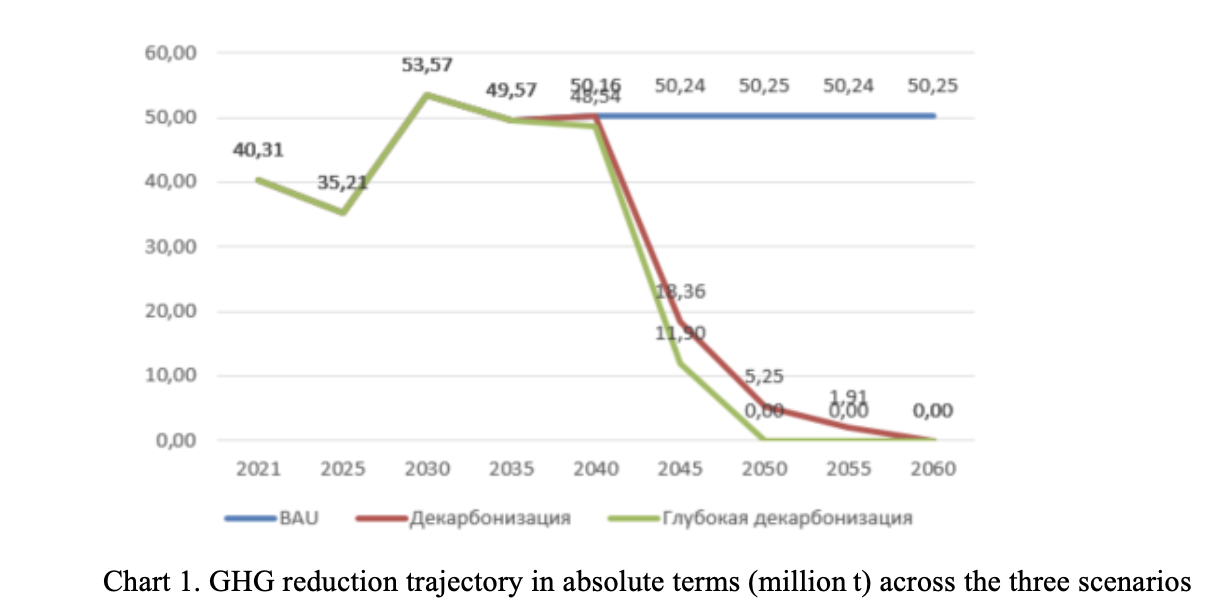
The Company has adopted a deep decarbonization scenario, targeting carbon neutrality by 2050.
For further details, please refer to the attached materials.
tab1113
The Company prioritizes climate risk management to provide a reasonable assurance of achieving its strategic objectives. Samruk-Energy JSC implements a comprehensive set of measures to manage climate risks. Climate risk assessments are integrated into the development of the Company’s strategy, the evaluation of investment projects, and the preparation of annual and medium-term plans.
As part of the analysis of the Program’s development scenarios, the Company has identified the key climate-related physical and transition risks.
Further information is available in the attached materials (see the “Energy Transition Program” subsection)
tab4446
Scope 3 includes indirect emissions that arise outside the area of direct operational control but are attributable to the organization’s activities. The system boundaries are defined by the full life cycle of products and services — from raw material extraction and production through transportation, use and disposal.
The inventory covered emissions from the following subsidiaries and affiliates of the Group:
- Ekibastuz SDPP-1 LLP
- ESDPP-2 JSC
- APP JSC
- AZhC JSC’s branch Energosbyt
- Bogatyr Komir LLP
- Moynak HPP JSC
- Shardarinsk HPP JSC
- Ust-Kamenogorsk HPP LLP
- Shulbinsk HPP LLP
- FWPP LLP
- Samruk Green Energy LLP
- Head Office of Samruk-Energy JSC
- Scope 3 emission categories included in the 2025 calculations
Indirect emissions were assessed across all relevant categories in accordance with the GHG Protocol. The following categories were included in the calculations:
- Purchased goods and services
- Purchased capital goods (equipment)
- Fuel- and energy-related activities not included in Scope 2 (applicable to Bogatyr Komir LLP and Almaty Electric Power Stations JSC)
- Upstream transportation аnd distribution
- Waste generated in operations
- Business travel
- Employee commuting
- Upstream transportation and distribution of sold products — applicable to Bogatyr Komir LLP
- Use of sold products — applicable to Bogatyr Komir LLP
- Category 13 — leased assets, applicable to the Head Office of Samruk-Energy JSC
Categories deemed immaterial or not applicable
The analysis established that the following categories were not relevant:
- Category 8 — upstream leased assets
- Category 10 — processing of sold products
- Category 12 — end-of-life treatment of sold products
- Category 14 — franchises
- Category 15 — investments
The categories are not applicable due to the nature of the production processes, the absence of processing of sold products (electricity and coal), limited use of leased assets, and the absence of franchising or investment activities by the SAs.
- Gases covered and emissions structure
The calculations were performed in accordance with the requirements of the GHG Protocol and national methodologies for the following greenhouse gases:
- CO₂ (carbon dioxide)
- CH₄ (methane)
- N₂O (nitrous oxide)
All emissions are presented in CO₂-equivalent terms.
- Calculation results and coverage
The Scope 3 indirect emissions inventory enabled the Company to:
- compile a complete list of significant sources of indirect emissions across the SAs;
- quantify gross emissions for each applicable Scope 3 category;
- expand the corporate carbon footprint database;
- ensure comparability of reporting with international ESG standards.
- Scope 3 emissions quantification results for 2025
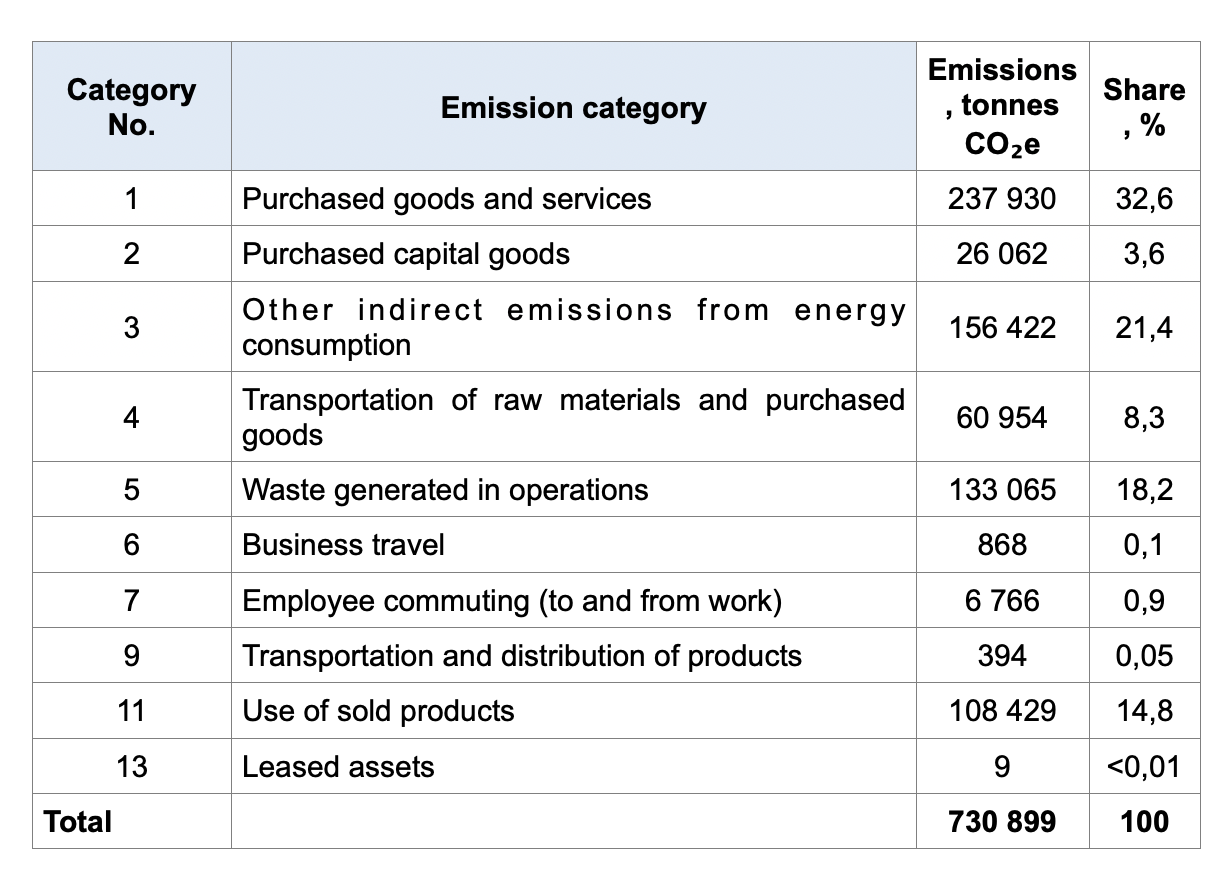
Total gross Scope 3 GHG emissions for each category across the subsidiaries and affiliates of Samruk-Energy JSC
GHG emissions structure
Scope 3 emissions of Samruk-Energy JSC are concentrated in several categories of indirect emissions.
The largest contributions to total emissions come from:
- · Purchased goods and services (32.6%), which represent the key source of indirect emissions associated with the supply chain;
- · Other indirect emissions from energy consumption (21.4%), reflecting the significant contribution of energy-related processes outside direct operational control;
- · Waste generated in operations (18.2%), resulting from production and technological processes.
Together, these categories account for 72.2% of total Scope 3 emissions, indicating the dominant role of the supply chain, energy consumption and waste management in the overall Scope 3 emissions profile.
Additional contributions come from:
- · Use of sold products (14.8%), reflecting impacts at the product use stage;
- · Transportation of raw materials and purchased goods (8.3%), associated with logistics operations.
The remaining categories (purchased capital goods, business travel, employee commuting, distribution of products and leased assets) collectively account for less than 5% of total emissions and do not have a significant impact on the overall Scope 3 emissions profile.
Thus, the structure of Scope 3 emissions demonstrates a concentration in a limited number of categories, primarily related to procurement activities, indirect energy consumption and waste, thereby defining the priority areas for managing and reducing indirect emissions under the Company’s climate strategy in accordance with the GRI Standards.
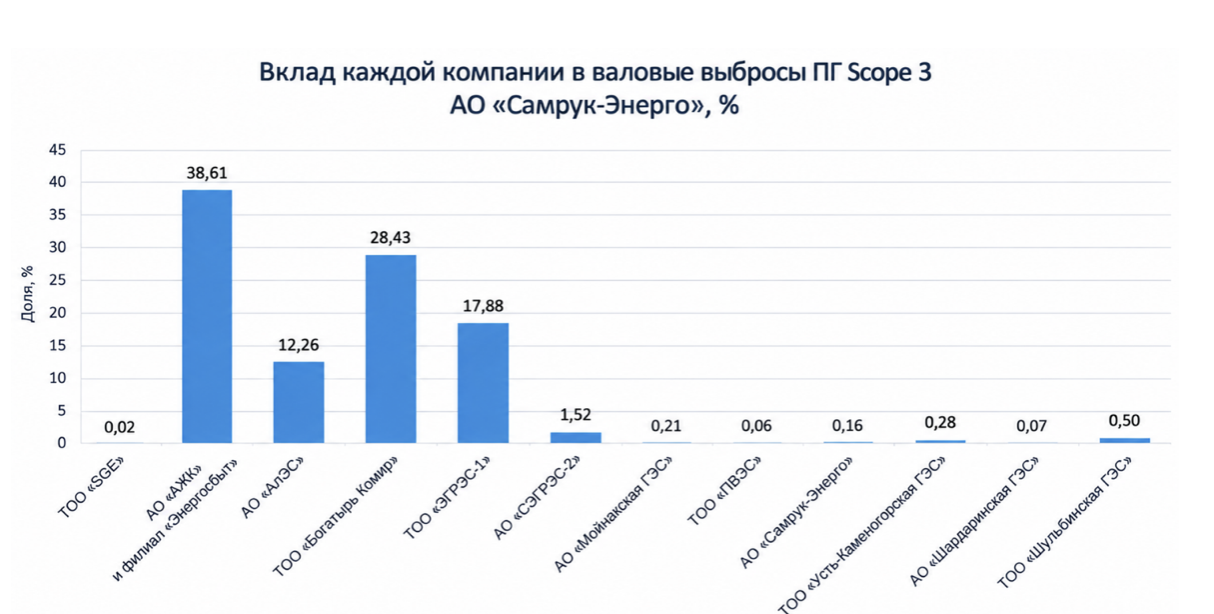
Total gross Scope 3 GHG emissions for each SA of Samruk-Energy JSC
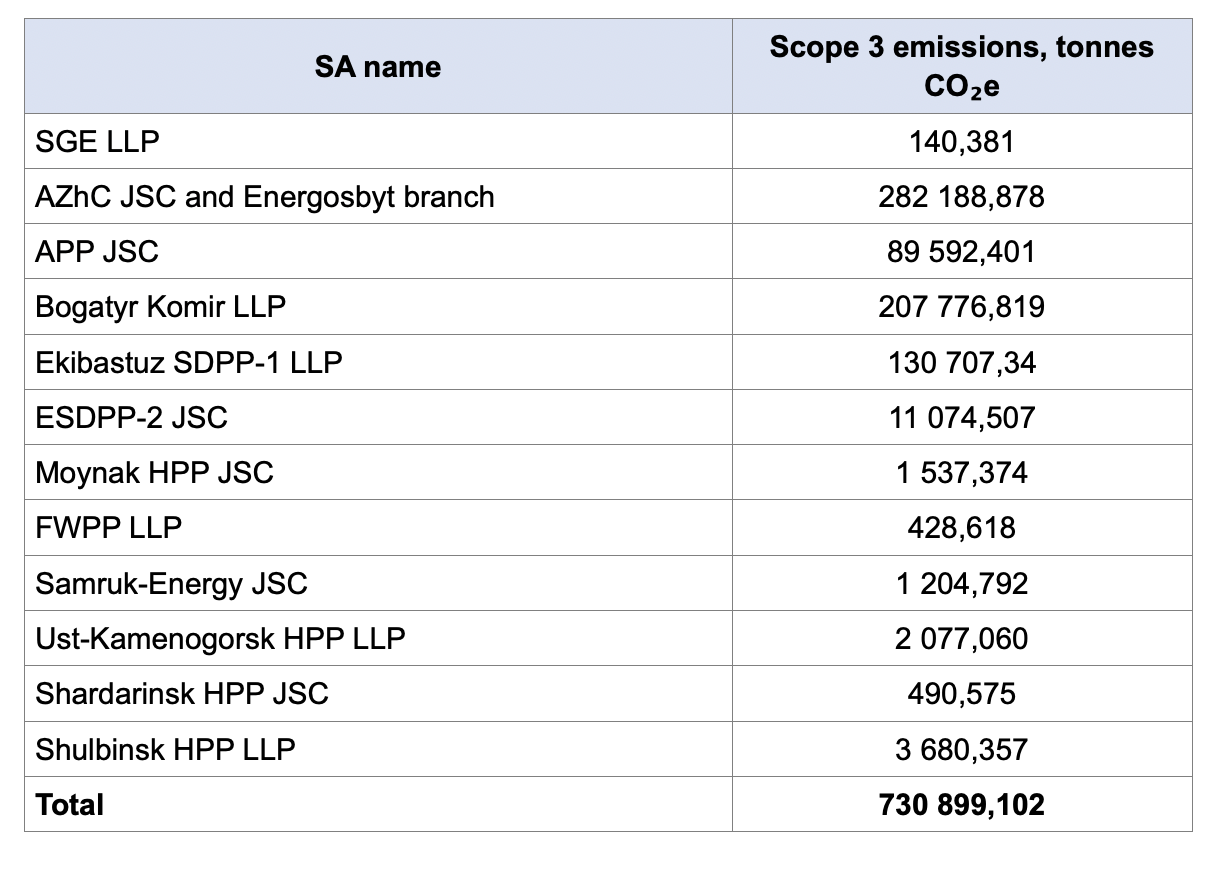
Thus, total Scope 3 greenhouse gas emissions across the Samruk-Energy JSC Group of companies amounted to 730,899.102 tonnes CO₂e.
As shown in the chart, Scope 3 emissions across Samruk-Energy JSC are highly concentrated, with approximately 85% of the total emissions (730,899 tonnes CO₂e) attributable to three companies — AZhC JSC and Energosbyt branch, Bogatyr Komir LLP and Ekibastuz SDPP-1 LLP. The largest contributions are associated with coal-fired power generation, coal mining, and indirect emissions from electricity sales and grid losses.
The remaining SAs account for a relatively small share of total emissions (less than 15%). At the same time, renewable energy facilities and hydropower plants account for minimal emissions (<1%), reflecting their low-carbon emissions profile.
Thus, the distribution of Scope 3 emissions across the SAs is highly concentrated, with the majority of the carbon footprint arising from a limited number of large-scale production and energy assets.
tab4
Сollaboration
“Samruk-Energy” JSC pays special attention to new technologies:
By the order of “Samruk-Energy” JSC, a scientific laboratory “Clean Coal Technologies” was established at the premises of Nazarbayev University IEO;
Participation in national and international projects / initiatives / associations
1) The company is a member of the ALE "Kazakhstan Electricity Association".
2) The company is a member of the ALE "Kazakhstan Association of Oil Gas And Energy Sector Organizations “Kazenergy"
tab
Occupational Safety and Health
Thank you for visiting our website. Your feedback is valuable to us, and we will certainly take it into account in our work. Feel free to share your suggestions through the "Comments and Suggestions" section. We look forward to collaborating with you!
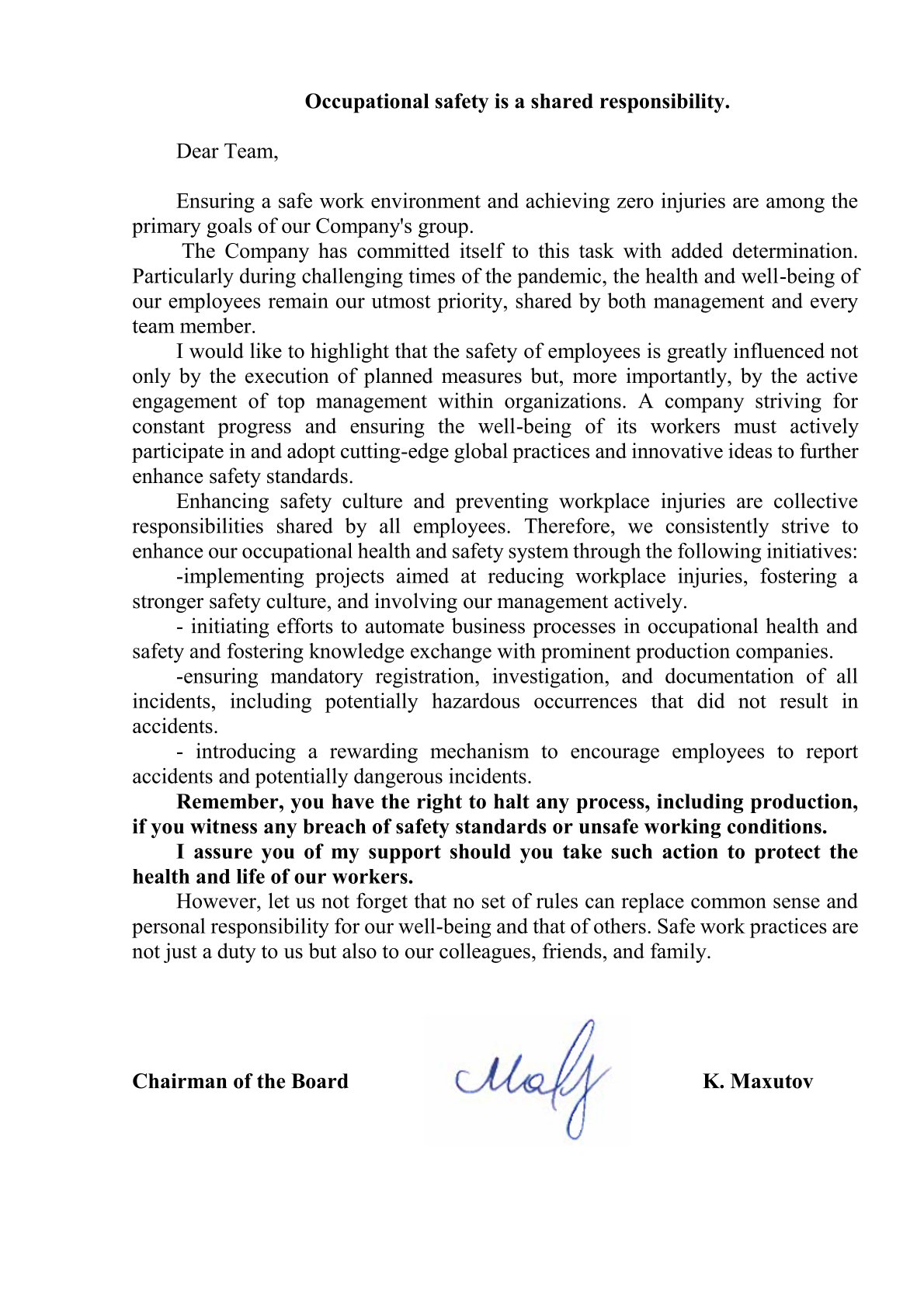
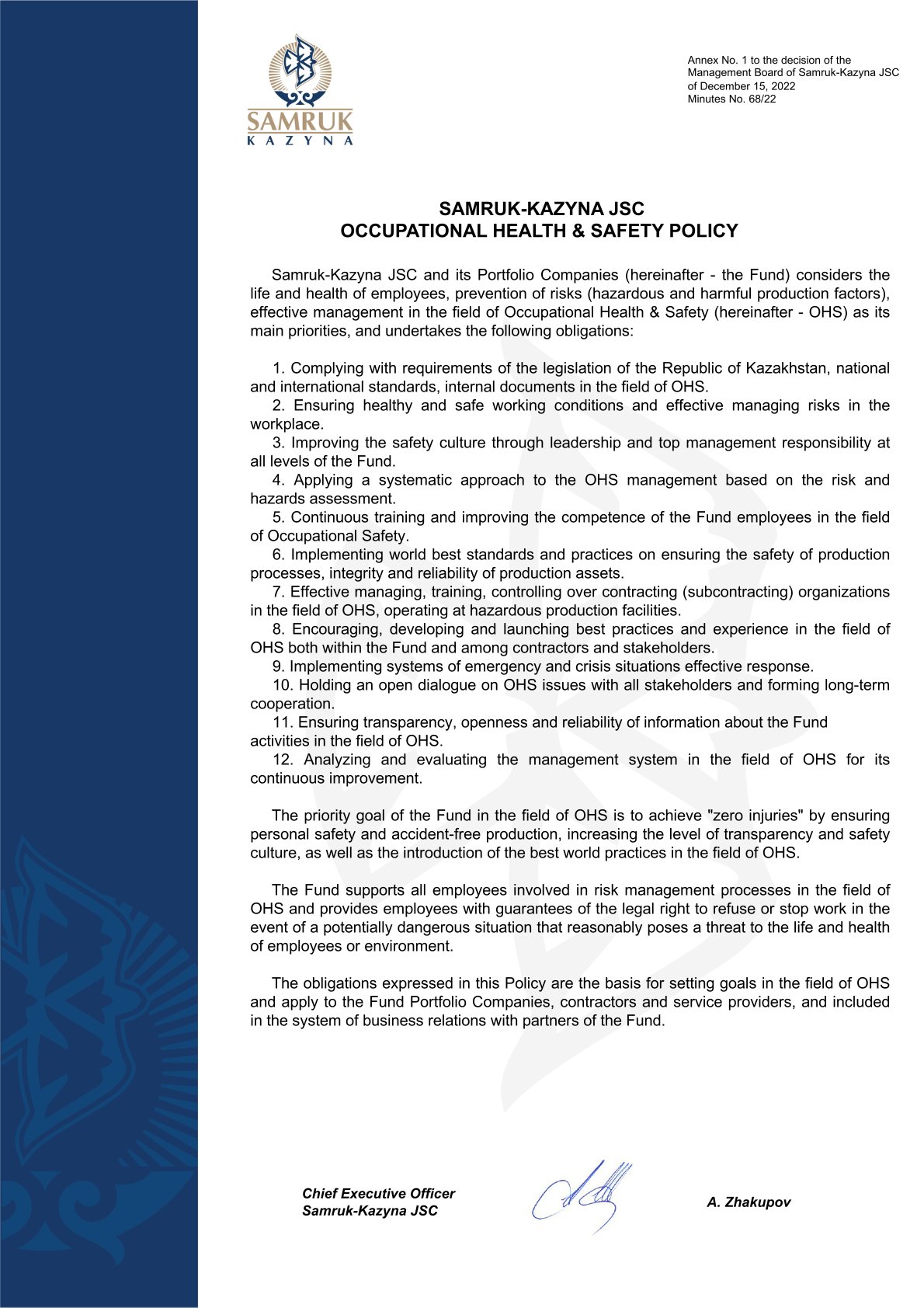
Address from the Chairman of the Board of “Samruk-Energy” JSC:
tab5
Our approach
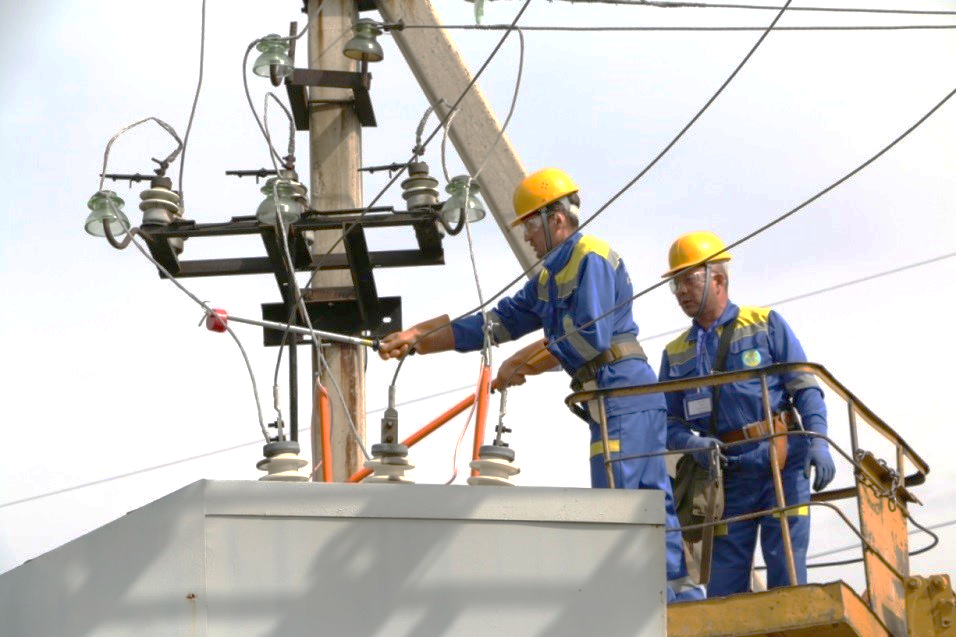
To enhance the efficiency of occupational health and safety management system, the Company has developed and adopted internal corporate standards:
- occupational health and safety policy;
- rules for providing information in case of accidents;
- subsidiaries and affiliates of “Samruk-Energy” JSC are certified according to ISO 45001 requirements.
“Samruk-Energy” JSC aims to lead in health protection and workplace safety.
The Company's management recognizes that its most valuable resource is its workforce. Effectively implementing policies regarding occupational health and safety, which includes improving working conditions, implementing advanced technologies, and providing comprehensive employee training, is crucial for the success of both the Company and the well-being of our Republic.
The Company commits to comply with the requirements of the Republic of Kazakhstan law in occupational health and safety, as well as international standards for occupational health and safety.
tab6
Ongoing projects
Project "Implementation of a new model for integrated security management"
Goal:
- Improvement of the occupational safety management system based on a conscious attitude to the culture of safe work, commitment, leadership and responsibility of managers and employees for safety, with a subsequent reduction in the level of injuries.
Benefits:
- Improving the safety culture/Involvement of personnel in occupational safety issues; Number of reports/appeals (about potentially dangerous incidents, about dangerous/safe behavior);
- Reduction of injury rates (LTIFR);
- Improving the evaluation of the effectiveness of the occupational health and safety management system;
The project "Safe production"
Goal:
- Reducing the level of occupational injuries by increasing the level of safety culture of employees, through the introduction of an accessible and transparent automated system for registration and investigation of incidents
Benefits:
- Registration and investigation of inconsistencies, formation of a corrective action plan. Registration of internal inspections on safety and labor protection.
- Registration of Leadership behavioral security audit, control of training, certification and training of personnel.
- Automation of business processes in the field of occupational safety and health.
The project "Visualization of efficiency and awareness management"
Goal:
- Raising awareness of senior managers on occupational safety and health issues
Benefits:
- Involvement of the first heads of subsidiaries on safety and labor protection issues;
- Improving the efficiency of the management of the occupational safety and health system;
tab7
The Company’s activities in workplace health and safety
Occupational health and safety is a course of action to ensure the safety of the vital signs of workers during the production process, consisting of a variety of regulatory, legal, socio-economic, sanitary, medical, preventive, rehabilitation and other measures and requirements.
Safety precautions are a series of measures taken by the employer aimed at creating a safe environment in the process of the employee performing his job duties.
The top management of the Company is aware that in order to increase the effectiveness of the implementation of goals and objectives, it is necessary to increase the level of involvement of executives of subsidiaries and affiliates by demonstrating personal commitment to occupational health and safety issues.
Ongoing activities:
control of the provision of employees of enterprises with means of individual and collective protection;
providing methodological and informational assistance to subsidiaries and affiliates on safety and occupational health issues;
monitoring the system of transparent registration of industrial accidents;
monitoring of the system of individual responsibility (security coupons);
identifying hazards and evaluating risk significance;
work safety analysis;
mechanisms have been developed to reward employees for reporting potentially hazardous incidents;
participation in internal investigations of accidents to identify root (systemic) causes;
registration and investigation of potentially dangerous incidents to prevent accidents;
conducting seminar-meetings on occupational health and safety at production facilities, involving specialists from OHS departments in subsidiaries and affiliates of the Company;
supervising the training of top managers and occupational safety specialists in IOSH and NEBOSH courses;
automated system for registering occupational health and safety related incidents and violations;
initiating a Memorandum of Cooperation in occupational health and safety with leading companies;
competition in occupational health and safety across the group of companies;
tab8
Occupational Injury Statistics
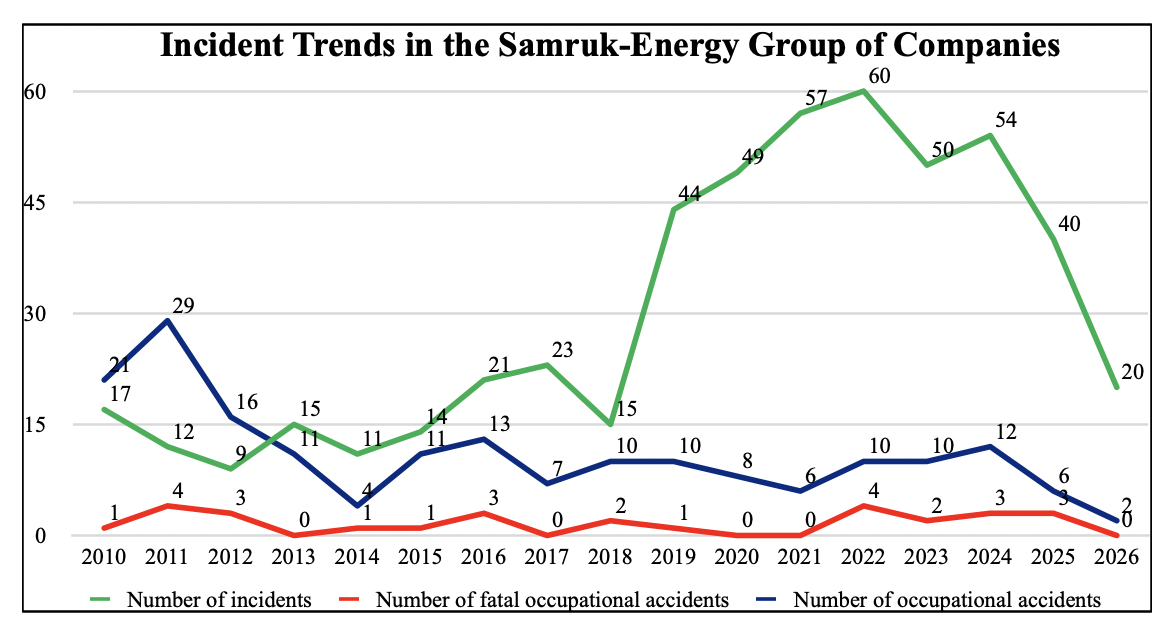
The Company is taking all necessary measures to achieve its objectives, including the implementation of international best practices. The ongoing projects are demonstrating interim results in the prevention of occupational injuries. The chart presents the trends in registered occupational accidents from 2010 to 2026.
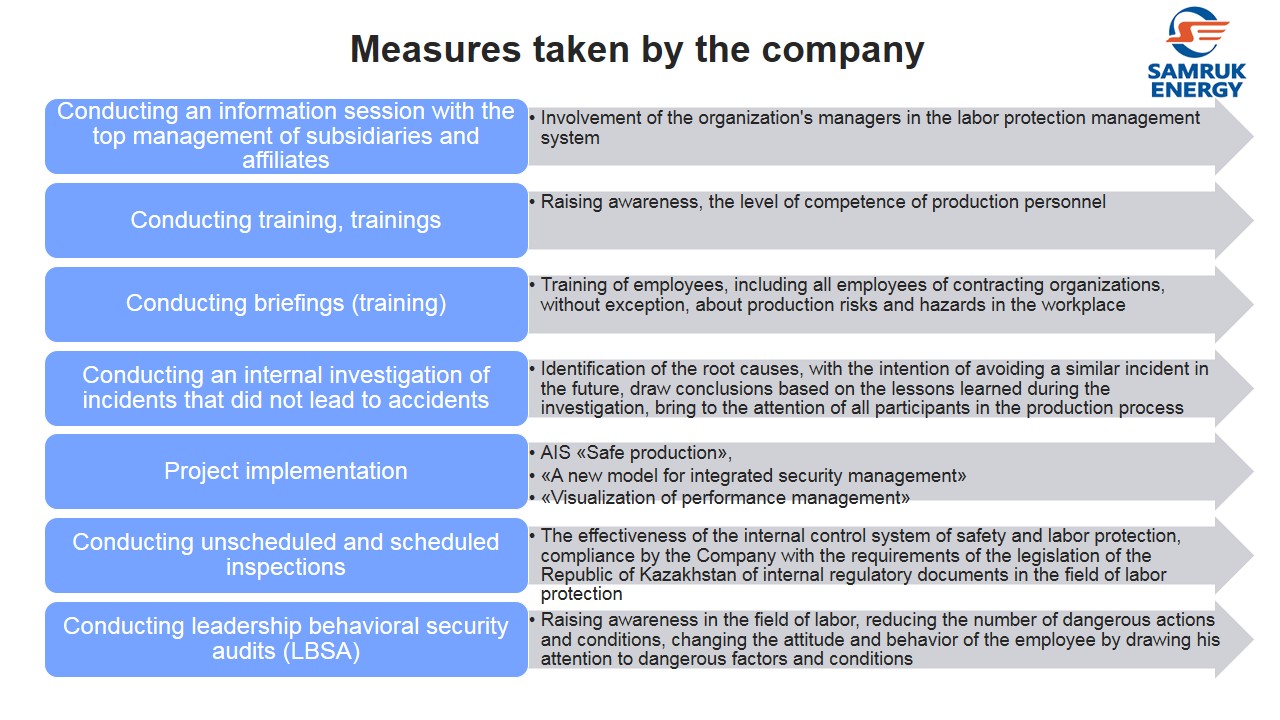
Types of accidents and root causes of industrial accidents:
- Insufficient identification of hazards and risk assessment.
- Victim's fall
- Impact of moving, flying, rotating objects and parts
- Personal negligence of the victim
- Unsatisfactory organization of work
- Improper control of line personnel
- Violation of safety and labor protection rules
tab
Video analytics
New technologies have already been successfully implemented to enhance workplace safety, specifically using artificial intelligence to detect and prevent violations and incidents. The following projects have been tested and deployed: Workplace video analytics, driver video analytics, and smart helmets with cameras. These technologies have been applied in five subsidiaries: AZhC, Almaty Power Plants (AlES), Bogatyr Komir, Shulbinsk HPP, and Ust-Kamenogorsk HPP. Specifically:
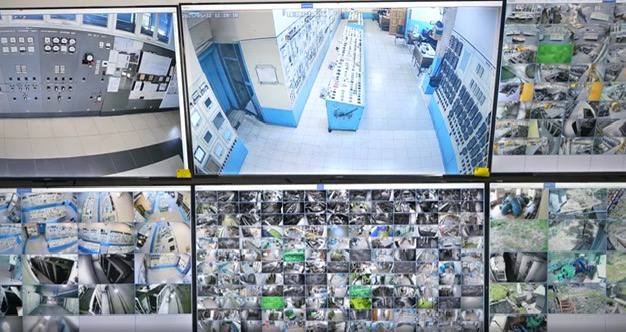
- AlES has installed 1,200 fixed cameras across all workplaces to monitor unsafe actions, non-use of personal protective equipment (PPE), and improper clothing in real time. The system can not only identify the type of violation but also use Face ID to recognize the employee responsible and send notifications to both the supervisor’s computer and the employee’s mobile phone. On a monthly basis, 1,065 violations are detected. Additional 400 cameras will be installed in 2025.
- Bogatyr Komir launched the Antison driver video analytics system on June 23, 2025, installed on all 60 dump trucks. This system accurately detects dangerous driver behaviors, including drowsiness, smoking, route deviations, and phone use. When a violation is detected, a vibration motor in the driver’s seat is activated, an audible alarm sounds in the cab, and a signal with video and photo evidence is sent to the control center. Since July 1, 2025, 1,392 violations have been recorded, reducing the likelihood of accidents and incidents in transportation.
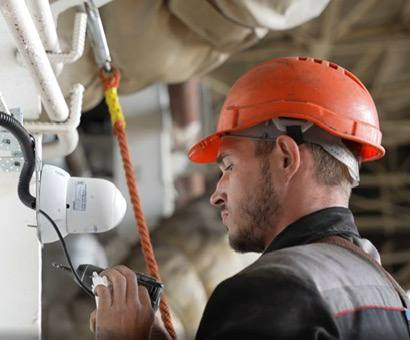
- AZhC successfully implemented the “Smart helmets” system in January 2025, consisting of helmets equipped with cameras and artificial intelligence. 31 units have been deployed, with 100 more planned for 2025. These helmets detect non-use of PPE, absence of protective clothing, and entry into hazardous areas, and they allow remote real-time feedback via a microphone. On average, 3–4 violations are detected monthly.
- Shulbinsk and Ust-Kamenogorsk HPPs introduced the Driver Assistance System on March 4, 2025, using 360-degree dashcams installed on nine vehicles (six more vehicles planned). The system monitors speeding, drowsiness, route deviations, lane departures, smoking, and seatbelt compliance. Since deployment, violations decreased from 12 to 3, a fourfold reduction.
The implementation of these new systems in the management of occupational safety processes has become one of the key elements in ensuring workplace safety, and Samruk is no exception.
The introduction of video-based technologies combined with advanced AI video analytics represents a strategic step that fundamentally changes the approach to occupational safety. This minimizes the likelihood of accidents and incidents, which is essential for protecting the lives and health of employees. The goal is for all employees to return home safe and unharmed.
Antison (anti-sleep system)
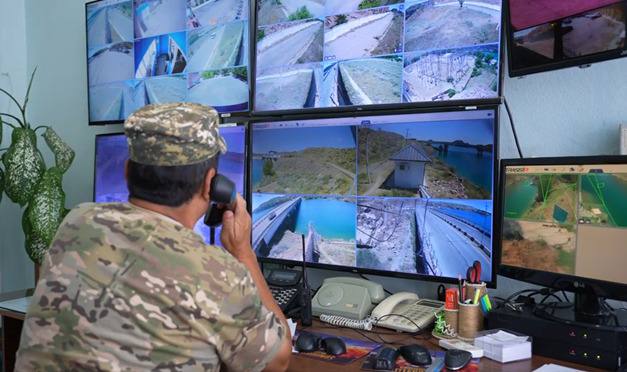
Over 1,200 smart cameras have been installed at AlES facilities.
-To enhance industrial safety, AlES implemented a modern AI and video analytics system. Today, the company’s facilities are equipped with over 1,200 IP cameras, smart turnstiles, breathalyzers, and Face ID systems.
What does the new system offer?
- Timely response to threats
- Detection of occupational safety violations (non-use of PPE, unauthorized access to hazardous areas, foreign objects)
- Employee movement monitoring and process transparency
- During 2025–2026, drones and signaling systems will be integrated into the safety infrastructure at AlES facilities
- Our goal – full compliance with occupational safety regulations and zero workplace injuries.

tab10
Development of energy conversation and energy efficiency

“Samruk-Energy” JSC is a leading producer of electricity, which plays a vital role in the country's energy system.
In accordance with the Law of the Republic of Kazakhstan "On Energy Saving and Improving Energy Efficiency," energy audits are conducted in all of the Company's subsidiaries and dependent organizations that are subjects of the State Energy Register, with the involvement of specialized accredited organizations.
Creating a sustainable economic development model is impossible without addressing energy efficiency and conservation.
A policy of efficient and rational energy consumption should curb consumption growth and significantly reduce environmental impacts.
2024 has been a year of sustainable growth, strategic decisions, and significant achievements for Samruk-Energy JSC. Energy conservation is a key factor in sustainable development, and we are proud of the results we have already achieved in this area. A total of 67 measures have been implemented to improve energy efficiency and rational use of resources, resulting in savings of over 1.2 billion tenge. These results were made possible through teamwork, new technologies, and continuous efficiency monitoring. We don't intend to rest on our laurels and are already working on new initiatives to make our energy consumption even more responsible.
Plans for 2025 and the Medium Term
- The Energy Conservation and Energy Efficiency Program is planned to be updated, taking into account modern challenges and sustainable development priorities, in the following key areas:
- Optimization of the use of electricity, heat, coal, and other resources.
- Increasing the energy efficiency of equipment, engineering systems, and production processes.
- Reducing energy costs.
- Increasing the economic efficiency of production activities.
- Reducing greenhouse gas emissions.
- Minimizing the negative impact on the environment.
- Introduction of modern energy-efficient technologies and equipment.
- Transition to energy-efficient solutions (LED lighting, automated control systems, etc.).
- Raising awareness and training staff and the public.
- Promoting responsible and rational resource consumption.
- Strengthening resilience to potential energy crises and external risks.
- The implementation of 65 measures aimed at energy conservation and energy efficiency is planned, with an expected economic impact of over 1 billion tenge.
tab11
Our approach
“Samruk-Energy” JSC group of companies places a strong emphasis on effective engagement with stakeholders, recognizing its paramount importance. Guided by principles of transparency and social responsibility, the group ensures sustainable development where the Company, its stakeholders, and society can collectively learn, assess, and analyze the needs, expectations, and opinions of both internal and external stakeholders; challenges and opportunities from the perspective of stakeholders; the most significant issues of concern to internal and external stakeholders.
The approach to responsible, thoughtful, and rational stakeholder interaction, grounded in standards like the AA1000 series, GRI, and other best practices, aids in making informed decisions about the Company's strategic development and methods to enhance its operations.
“Samruk-Energy” JSC's engagement with stakeholders is characterized by its commitment to investing in development, the future of its customers, employees, partners, and suppliers, thereby ensuring the sustainable progress of both the Company and local communities. It entails making social investments in areas of significance within the Company's presence territory, alongside a readiness to foster collaboration with all parties for adaptable responses to external and internal challenges.
To enhance the efficiency of stakeholder interaction, “Samruk-Energy” JSC has implemented a Communication Strategy across the entire group of companies. This strategy establishes a unified approach to corporate communications, delineates target audiences, communication principles, media planning, crisis response procedures, internal and external PR tools, and the Company's external positioning. The management of sustainable development within the Company governs the policy and methodology for stakeholder engagement.
The corporate communications policy, stakeholder identification, impact assessment, and the identification of material topics are subject to approval and oversight at the Board of Directors level.
The execution of initiatives and plans for stakeholder interaction, along with their monitoring, falls under the competence of the Company's Management Board. Annually, the Board reports to the directors on the outcomes of activities related to stakeholder engagement.
Specially established Committees under the Board of Directors and the Management Board oversee the stakeholder interaction system within their respective areas of responsibility.
The outcomes derived from the Company's engagement with stakeholders serve as the cornerstone for a robust and validated sustainable development policy. Within this framework, the Company endeavors to extensively incorporate sustainable development principles by adopting best practices in production, environmental initiatives, occupational safety, and the social sphere. This approach aims to foster economic growth in the regions where the Company operates while maintaining an optimal balance between stakeholder interests and the Company's strategic objectives.
Engagement with stakeholders not only helps in cultivating social capital but also aids in the prevention and mitigation of risks while identifying fresh opportunities for advancement.
tab1666
Stakeholder Engagement System Assessment
It is crucial for the Company to ensure that all stakeholders, both external and internal, are heard. The Company insists on its employees and stakeholders adhering to high standards of ethics and integrity, as well as all legal requirements.
All stakeholders may report any actual or suspected theft, fraud, corruption, violations of the Fundamental Business Principles, the Code of Conduct, or violations of the laws of the Republic of Kazakhstan, and may also submit their suggestions in the following ways:
 |
 |
 |
 |
 |
 |
|
Hotline https://www.samruk-energy.kz/en/navigation-and-support/hotline |
Feedback for all stakeholders https://www.samruk-energy.kz/en/navigation-and-support/feedback-all/feedback |
Feedback for temporary workers or individuals not employed by the group of companies and other stakeholders on ongoing projects: https://www.samruk-energy.kz/en/navigation-and-support/feedback-all/feedback-other |
Chairman of the Management Board Blog https://www.samruk-energy.kz/en/navigation-and-support/chairmans-blog |
Ombudsman https://www.samruk-energy.kz/en/company/corporate-governance/corporate-governance-main-en/ombudsman |
Annual Report Questionnaire |
The Company continuously monitors all incoming communications through all feedback channels and annually presents the analysis and monitoring results to the Board of Directors to improve the effectiveness of stakeholder engagement.
The Company analyzes the statistics of inquiries, topics raised by stakeholders, areas of concern, and the timeliness of the Company's responses, and develops recommendations for improving stakeholder engagement.
The results of the analysis contribute to the following objectives:
1) engaging the appropriate level of management in resolving the issues and problems raised, and taking into account suggestions for improvement;
2) analyzing and implementing preventive measures in response to concerns raised by external stakeholders, the public, and individuals;
3) maintaining trust in the Company as a socially responsible energy holding company.
The Company maintains a centralized Complaints and Appeals Database for the Samruk-Energo JSC group of companies, which is used to annually analyze all types of complaints from all subsidiaries and affiliates. The results of the analysis are communicated annually to the Board of Directors.
Statistics of appeals and complaints
|
Source |
Quantity |
||
|
2023 |
2024 |
2025 |
|
|
Hotline (incl. personal appeals to compliance officers) |
95 |
100 |
75 |
|
Office of "Samruk-Energy" JSC, including: |
9 339 |
9 999 |
10677 |
|
from the State Authorities |
315 |
1 096 |
760 |
|
from the Shareholder |
802 |
793 |
896 |
|
Appeals, including those of the offices of subsidiaries and affiliates |
112 |
35 |
213 |
|
E-otinish |
92 |
37 |
|
|
Web portal https://zakup.sk.kz/ |
47 |
38 |
|
|
Security Service |
0 (11)1 |
1 (6) |
3 (19)2 |
|
Feedback form on the website |
0 |
0 |
0 |
|
Budsmen and trade unions |
41 |
30 (33)3 |
35 |
|
Courts and supervisory authorities |
4 |
20 |
25 |
|
Written appeals to the manager (incl. Blog of the manager by company) |
4 |
13 |
42 |
|
Conciliation Commissions |
34 |
91 |
40 |
|
TOTAL |
290 |
429 |
508 |
1Appeals and complaints considered by the Security Service came from various sources of feedback. The number of appeals and complaints considered by the Security Department is indicated in parentheses.
2Repeat Appeals
3data including the Hotline
In 2025, 508 enquiries and complaints were registered through the Company’s feedback channels, compared with 429 in 2024 and 290 in 2023. The enquiries covered a wide range of matters related to the activities of the Company and its subsidiaries and affiliates, including procurement procedures, labour relations and working conditions, compliance with safety requirements, business ethics, and actions of officials. The Company also received proposals for cooperation, invitations to participate in business and expert events, and other stakeholder requests.
All enquiries received are reviewed by the relevant structural units within their respective areas of responsibility. Where non-compliance or violations are confirmed, appropriate measures are taken. No confirmed cases of discrimination or corruption were recorded in 2025.
The Company ensures confidentiality in handling enquiries and provides the possibility of using anonymous feedback channels. The results of the review and analysis of enquiries help identify issues of greatest relevance to stakeholders and are used to improve internal processes and stakeholder engagement mechanisms.
tab177
QUESTIONNAIR
Dear reader!
We would appreciate it if you learn about the Annual report on the Company’s operating results for 2019 and complete the questionnaire on identification of relevant topics in order to cover them in the next “Samruk-Energy” JSC annual report. Your feedback is very important to us!
Link to the questionnaire
tab12
10 principles of the UN Global Compact
In 2011, the Company declared its commitment to follow the 10 principles of the UN Global Compact in its strategy and day-to-day operations and is a member of UN Global Compact.
The company assumed the implementation of following principles:
|
In the field of observance of human rights |
|
|
In the field of labor relations |
|
|
In the field of environmental protection |
|
|
In the field of fight against corruption |
|
As part of its accession to the UN Global Compact, the Company annually publishes Progress Report, which it posts on its website https://www.unglobalcompact.org/

tab14
Women’s empowerment principles
In 2011, Samruk-Energy joined the UN Global Compact, integrating its strategy and daily operations with the Compact's 10 principles.
Specifically, concerning human rights, “Samruk-Energy” JSC group of companies diligently adheres to internationally proclaimed human rights and those established by Kazakhstan's laws. In the realm of sustainable development, the company's primary objective in interactions with employees is to ensure the realization of the right to work, with a society that acknowledges the principle of equal rights and opportunities.
Moreover, the Company is committed not only to developing human rights policies but also to prioritizing key initiatives that promote gender equality in the workplace, thereby improving the rights and opportunities of women.
These principles are intended to assist in the creation and execution of fresh policies and approaches aimed at enhancing women's rights and opportunities across all levels and industries.
The endorsement of these principles by "Samruk-Energy" JSC demonstrates the company's commitment to gender equality principles, recognized as a vital component of sustainable development, and a belief that companies offering equal opportunities to both women and men attain greater success and yield better outcomes.
The principles encompass seven steps that a company can employ to enhance women's rights and opportunities:
1. Establishing active support for gender equality initiatives at the level of the company’s management.
2. Equal opportunities: Inclusion and the absence of discrimination.
3. Health, safety, and freedom from violence.
4. Education and skill enhancement.
5. Development of enterprise, sales methods, and supply chains.
6. Community engagement and societal leadership.
7. Transparency, assessment, and reporting.
Ensuring equal treatment for both men and women is not only a matter of moral correctness but also a smart business decision. The active involvement of women in our company's operations is not only sensible in the present but also holds long-term benefits for our business. A broad approach to sustainability and corporate responsibility, including empowering women as a central goal, will benefit everyone. The seven steps of the 'Women's Empowerment Principles' will guide us in achieving these opportunities.
| Indicator | 2023 | |
|---|---|---|
| Men | Women | |
| Top managers | 58 | 7 |
| Executives | 1 892 | 477 |
| Specialists | 1 260 | 1 788 |
| Workers | 10 063 | 2 347 |
tab15
Our approach
Social responsibility is an integral part of “Samruk-Energy” JSC development strategy, since we are aware of our contribution to social development. Social corporate responsibility projects are aimed at ensuring safe and comfortable working conditions.
Human Resources Department works on the followings tasks in line with social responsibility:
- Creation of favorable environment for employees;
- Retention of internal talents and recruitment of highly qualified staff;
- Ensuring social guarantees and social stability at the Company
The Company is committed to:
- Reinforce and promote the principles of social partnership and collective bargaining regulation;
- Make welfare payments in order to retain, attract qualified employees and create motivation for “Samruk-Energy” JSC staff.
- Improvement of social stability;
- Involved top management. Building a high-potential pool of successors for key positions;
- Enhancing the Employer brand.
“Samruk-Energy” JSC group of companies strives to provide a competitive social package, the availability of which allows attracting highly competitive candidates from external market. Compensation and benefits are designed to improve the welfare and level of social protection of employees and their families. The number of social payments and benefits provided to employees of the Company’s Group in accordance with signed collective agreements include:
- Financial assistance for health improvement during vacation, childbirth, weddings, funerals (for employees and close relatives), medical treatment for retirees, emergencies, and more.
- Income loss support (financial assistance for maternity and paternity leave, and leave related to the adoption of a newborn child)
- Voluntary health insurance.
- Health and wellness retreats for employees and their children.
- one-time bonuses for milestone anniversaries - 50, 60, and 70 years, expenses for organizing festive, cultural, and sports events, as well as New Year gifts for children.
- loan payments.
- compensation for injury or loss of a primary earner
The annual measurement of indicators of social stability and employee involvement allows taking timely measures on increasing employee loyalty and trust, social welfare, and employee involvement, improving working conditions and processes associated with staff work, developing communication systems and informing about any changes.
In 2023, the NPI "Center for social interaction and communications" conducted an engagement survey among the employees of “Samruk-Energy" JSC head office. The survey assessed employee well-being based on four elements: health, engagement, social well-being, physical and mental well-being, and financial well-being. The overall Social well-being index scored 43%, which corresponds to the "satisfactory" category, while the social stability index reached 72%.
To analyze the level of social stability at "Samruk-Energy" JSC, a sociological study was conducted among production personnel in 2023, using the methodology of Samruk Research Services. According to the survey, the integrated SRS indicator for "Samruk-Energy" JSC was 59%.
Employees of Samruk-Energy JSC have equal access to training and professional development programmes, as well as equal opportunities for career growth based on their professional competencies, regardless of age, nationality, gender, race or religion. The Company's regulatory documents contain provisions that ensure equal pay for men and women performing the same work.
This approach ensures that salaries, incentives, benefits and other forms of compensation – both monetary and non-monetary – are free from discrimination.
The company trains employees on inclusion and equality. In November 2024, HR professionals received Diversity, Equality and Inclusion (DEI) training to raise awareness and understanding of the importance of equal opportunities in the workplace.
Samruk-Energy JSC cares about equal opportunities and provides workplaces for people with disabilities. In 2024, as part of the implementation of the Roadmap for Improving Sustainable Development Management, the Programme for Creating an Accessible and Inclusive Environment for Persons with Disabilities (PWD) in the Samruk-Energy JSC Group of companies was approved. The main objectives of the programme are employment of PWDs, elimination of physical and technical barriers at workplaces, as well as provision of social guarantees and benefits. For example, in 2024, the Company's subsidiaries and affiliates created conditions for the convenience of employees with disabilities: car parks, ramps with call buttons, tactile tiles and equipped sanitary facilities. Priority services for citizens with disabilities are also provided, including the ability to submit applications online. At the end of 2024, the Company employed 206 people with disabilities. At the end of 2024, 31 disabled persons were employed in subsidiaries and affiliates, which exceeds the established quota.
tab16
Our activity
Social corporate responsibility projects aim to provide safe and comfortable working environment, professional development, address housing issues and improve the quality of life of employees and their families, financial support for veterans and pensioners, and support for social communities.
“Samruk-Energy” JSC is one of the largest employers in the Republic of Kazakhstan. As of December 31, 2023, the total workforce of the group of companies under “Samruk-Energy” JSC amounted to 17 892 employees.
Due to specific nature of “Samruk-Energy” JSC's operations, male employees are primarily engaged in key production areas, making up 74% of the total workforce in 2023.
|
Employees category |
The total number of female employees at the end of the reporting period |
% of the total workforce |
|
Top management |
7 |
12% |
|
Executives |
477 |
20% |
|
Specialists |
1 459 |
53% |
|
Administrative employees |
1 788 |
58% |
|
workers |
2 347 |
19% |
|
Total |
4 619 |
25% |
“Samruk-Energy” JSC implements the following activities for health improvement purposes and in order to arrange leisure for employees:
- the provision of additional days to paid annual labor leave for years of employment;
- carrying out physical fitness work and the development of mass sports among employees and members of their families, providing them with access to sports infrastructure, organizing training and competitions;
- regular promotion of healthy lifestyle among employees using corporate media;
- the annual allocation of funds for cultural events, purchase of New Year's gifts, purchase of valuable gifts on Power Engineer’s Day;
- the organization of leisure activities for school-age children during the summer holidays at health camps or health and recreation resorts of the Republic of Kazakhstan;
- partial compensation for the cost of trips to health camps and children's health centers for children with disabilities and orphans for employees of the Company.
Moreover, Conciliation Committees have been established and operate at “Samruk-Energy” JSC group of companies; they comprise representatives from the employer and representatives of trade union workers, and their main roles are conducting of explanatory works among staff, consideration of complaints and appeals.
tab17
Development of the regions where we operate through
For many years, as part of our corporate social responsibility, "Samruk-Energy" JSC has been actively involved in the development of the regions where it operates and maintains continuous engagement with local communities. The Company collaborates on matters related to its participation in local infrastructure development, environmental enhancement in the region, and providing social support.
"As part of its activities, Samruk-Energy JSC continues to strengthen its engagement with local communities. On December 28, 2023, the Management Board approved the Policy on Interaction with Local Communities, which aims to define the principles, commitments, and feedback mechanisms with residents in the regions where the company operates. This policy was developed in accordance with the Roadmap for Improving the Sustainable Development Management System for 2023-2024."
The Company plays a crucial role in the country's infrastructure, supplying electricity to approximately 19 million consumers. We promote employment by creating and sustaining over 17 000 jobs across Kazakhstan. We contribute to the economic development of regions by fostering equitable partnerships with our suppliers and contractors, fulfilling our tax obligations, and creating employment opportunities.
Our top priority is to enhance the quality of life for the population and support social initiatives in all regions where we operate. The Company's social strategy revolves around creating an environment and conditions that enable local residents to fulfil their potential and actively contribute to economic and social growth.
We make a significant contribution to the well-being and socio-economic development of the regions where we operate through:

Providing the population with electricity, heat, and coal

Creating job opportunities for local residents, contributing through social taxes and contributions, pension and insurance payments, expenses for medical services for employees, and other forms of employee support

Implementing investment projects that impact the development of the regions where we operate, improve the quality of life for the population, and create employment opportunities

Maintaining public infrastructure to ensure substantial contributions to regional budgets through taxation

Investing in local communities through donations to charitable and non-governmental organizations, as well as supporting research institutions through a unified entity “Samruk-Kazyna Trust” Social Projects Development Fund

Supporting social programs, cultural initiatives, and educational events
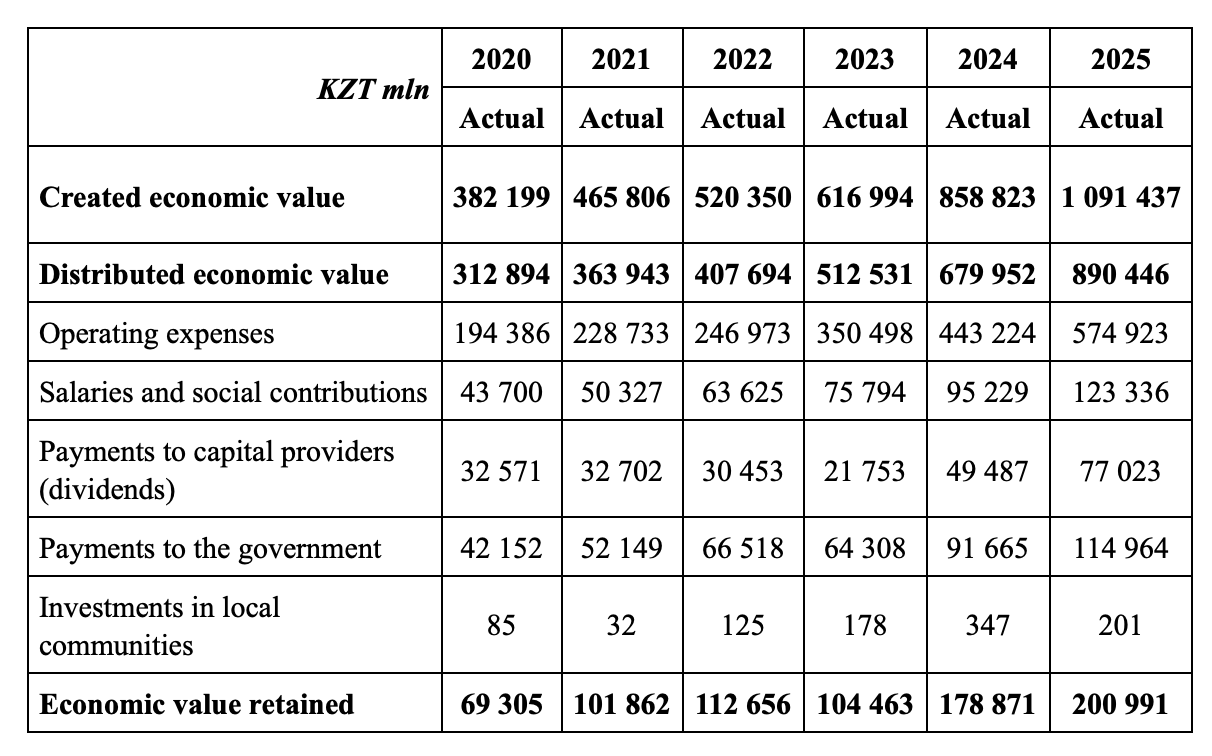
The implementation of certain investment projects involved the enhancement of local infrastructure in the regions where the group of company's enterprises are situated.
The infrastructure of Solnechny village and Ekibastuz сity is undergoing development in the region where "Station Ekibastuz SDPP-1" LLP and "Station Ekibastuz SDPP-2" JSC are situated.
In Solnechny village, a range of essential infrastructure amenities has been established, including a mosque, a church, a Cultural Center, sports and wellness facilities, a swimming pool, and a hotel. Likewise, in the city of Ekibastuz, new residential complexes, dormitories, and a Cultural Center for power engineers have been built, along with the construction of roads linking Ekibastuz SDPP-1 Station to Ekibastuz SDPP-2 Station.
“ESDPP-2 Station” JSC holds a central position in the development of Solnechny village, employing a significant 60% of the local workforce and serving as a cornerstone enterprise for the community. Within its organizational framework, the company provides crucial social facilities such as a medical and preventive service, a swimming pool, and a dormitory facility resembling a hotel. Ongoing initiatives focus on enhancing the aesthetic appeal of the area, with annual funding from the station's budget allocated to ensure their proper upkeep and operation.
Similar initiatives were also carried out in the areas surrounding “Moynak HPP” JSC's operations. In these regions, 77 houses, a kindergarten, and a mosque were constructed for “Moynak HPP” JSC employees, where a total of 235 individuals reside, including 100 employees and 135 - their family members.
All employees of “Moynak HPP” JSC were allocated company housing (comprising 77 residential buildings), comfortable houses offering 3, 4, and 5 rooms with modern amenities. Each dwelling includes private plots spanning 6 acres and auxiliary structures. Additionally, a store was established to supply groceries and essential commodities. In the operational service village, there is a kindergarten for 30 children catering to the Company's employees' children. “Moynak HPP” JSC consistently supports the kindergarten situated within Moynak village's premises.
“Bogatyr Komir” LLP wholeheartedly backs a range of social initiatives with the goal of enhancing people's quality of life and actively engages in urban social programs. Extensive efforts have been undertaken to enhance children's playgrounds and sports facilities in the Mountain municipal district of the city. These initiatives encompassed the repair and restoration of children's playgrounds, the provision of sand for sandboxes, and the enhancement of “Shakhter” Park. Additionally, a monument honoring the esteemed akyn (poet) and philosopher Mashkhur Zhusup Kopeyev was built, and a traffic light was installed on Kunaev street.
In addition to projects aimed at enhancing local infrastructure, the Company engages in initiatives designed to provide support to underprivileged and economically disadvantaged sectors of the community.
Core operations assistance program
As part of our core operations, we are dedicated to assisting vulnerable individuals among the population (who, due to circumstances, have lost housing, a breadwinner, or the physical ability to work (including those who did not have these from birth), as well as low-income individuals whose total income falls below the subsistence level:
- In accordance with the Memorandum of Cooperation between “Bogatyr Komir” LLP and the local governing body, “Bogatyr Komir” LLP annually provides complimentary coal shipments to:
- social facilities in Pavlodar region (rural schools, hospitals, clubs, and other social facilities);
- for charitable purposes (mosques, monasteries, public funds, socially vulnerable segments of the population);
- employees of the Company residing in houses with stove heating, providing 10 tons of coal free of charge once a year.
In 2022, a total of 127 878,5 tons of coal were shipped, including:
- to social facilities in Pavlodar region – 78 402,6 tons;
- for charitable purposes – 6 683 tons, including:
- mosques and monasteries – 270 tons;
- socially vulnerable segments of the population through the Akimats (municipal authority) of Pavlodar region – 6 033 tons;
- employees and pensioners – 3 355 tons.
In line with the Rules for differentiation of electricity tariffs by energy supply organizations based on the amount of electricity consumed by individuals, which were approved by the Order No. 57-OD dated 20. 02. 2009 of the Agency of the Republic of Kazakhstan for the regulation of natural monopolies, specific consumption thresholds are defined for various categories of individuals in the regions where we operate. These categories include elderly pensioners living alone, disabled individuals, veterans of the Great Patriotic War, and those with equivalent status. The local executive body extends housing assistance to low-income residents for covering housing and utility expenses, it is provided when utility costs exceed 5% of the total family income (Maslikhat (local representative council) decision No. 232, dated June 2, 2014)
For more detailed information, please refer to the following link:https://www.gov.kz/memleket/entities/almaty/activities/6766?lang=ru
Social initiatives
- Assistance to pensioners and war veterans - internationalists in the form of a monthly payment of 150 kWh for consumed electricity (“Shardarinsk HPP” JSC).
- Providing support to World War II participants, Labor Front members, and equivalent individuals on Victory Day (“Ekibastuz SDPP-2 Plant” JSC, “Almaty Power Plants” JSC).
- Aid to low-income and large families (“Bogatyr Komir” LLP, “Shardarinsk HPP” JSC, “Almaty Power Plants” JSC).
- On the International Day of Older Persons, financial assistance was provided to non-working pensioners of ESDPP-2 in Solnechny village and Ekibastuz city, a special event was organized for veteran power engineers of ESDPP-2. Company activists organized “Biz Birgemiz” campaign with the aim of assisting pensioners by clearing snow from their yards, offering congratulations, and presenting New Year gifts to elderly individuals living alone and children from socially vulnerable segments of the population in Solnechny village.
- Various entertainment and educational events were held throughout 2022 for children with disabilities, children from large families, and orphans. These activities included culinary masterclasses, excursions, morning performances, trips to the skating rink and bowling alley, free classes at an art school, 'Fun Starts' competitions, track and field race, “Memlekettik ramizder”, “Nicotine for Vitamins” campaigns, a charity fair, and excursions to the Mausoleum of M. Zhusup.
“Bogatyr Komir” LLP initiated and implemented the "Boxes of Goodness" project, which provided food and other assistance to low-income, economically disadvantaged, and large families, pensioners, and individuals facing difficult life situations. Also, as part of social initiatives, “Almaty Power Plants” JSC Group and the Local Trade Union "Energia" provided assistance to 280 families with multiple children and low-income families.
- A computer class was established at the Kainar ELC with the support of Ekibastuz SDPP-2 to enhance computer literacy among children and adults. Educational excursions were organized for students of Almaty State College of Energy and Electronic Technologies and the college under the Almaty University of Energy and Electronic Technologies named after Gumarbek Daukeyev.
The Company personnel actively participated in the "Road to School" event, organized by “Samruk-Kazyna” JSC Fund in collaboration with the Committee for the Protection of Children's Rights of the Ministry of Education of the Republic of Kazakhstan. The initiative aimed to provide essential assistance to schoolchildren from low-income families, including the purchase of stationery for 12 thousand first-grade backpacks for children from 10 regions of the country.
- Ekibastuz SDPP-1, SDPP-2, and “Bogatyr Komir” LLP extended support to the municipal services of the city in addressing the aftermath of the accident.
The group's enterprises actively support various social initiatives aimed at improving people's quality of life. This support is ongoing and includes participating in citywide cleanup events, enhancing and beautifying the surrounding areas, collaborating with religious denominations and public foundations, and providing tangible support to different groups. These groups encompass pensioners, veterans of the Great Patriotic War, low-income families, individuals with disabilities, and single mothers. The assistance takes various forms, including monthly subsidies, one-time financial aid, the distribution of food provisions, and offering preferential vouchers, among other measures.
For more comprehensive information about these initiatives, you can refer to the Integrated Annual Reports of “Samruk-Energy” JSC at the following link: https://www.samruk-energy.kz/ru/shareholders-and-investors/annual-reports-on-the-results-of-the-company-s-activities
Charity projects
The primary charity activities are carried out through the Single Operator, a part of “Samruk-Kazyna” JSC group of companies, with one of its portfolio companies being “Samruk-Energy” JSC.
“Samruk-Kazyna Trust” Social Projects Development Fund implements charitable projects and programs that are designed to address socially important issues for the general population. These initiatives involve contributions and participation from all the companies within “Samruk-Kazyna” JSC group.
The Group of companies of Samruk-Energy JSC provided material assistance in the amount of KZT 800 million to eliminate consequences of floods in the regions of Kazakhstan. The funds were transferred to the Samruk-Kazyna Trust.
In 2024, the Company implemented a number of social initiatives aimed at supporting society. Within the framework of humanitarian programmes, assistance to flood victims was organised, including collection of necessary resources and provision of financial support in the amount of KZT 800 million. The Company also took an active part in the charity marathon organised by Samruk-Kazyna JSC, allocating KZT 18 million for this purpose.
For more comprehensive information about these initiatives, you can refer to the Integrated Annual Reports of “Samruk-Energy” JSC at the following link: https://www.samruk-energy.kz/ru/shareholders-and-investors/annual-reports-on-the-results-of-the-company-s-activities
Reporting on the achievement of results of implemented programs is available at the link: www.sk-trust.kz
tab19
Community development programs
Conscious of its responsibility, the Company strives to promote the development of society. One of the ways the Company contributes to the well-being and socio-economic progress of the regions where it operates is by implementing investment projects. These projects have a direct impact on the improvement of local infrastructure, the enhancement of the quality of life for the population, and the creation of employment opportunities.
The company manages a portfolio of investment projects that align with the country's national economic development programs and adhere to the principles of responsible investment. Further details about these projects can be found at the the following link: https://www.samruk-energy.kz/ru/shareholders-and-investors/projects
In alignment with the principles of responsible investment, we adopt an Environmental, Social, and Governance (ESG) framework when making investment choices. This approach enables us to effectively mitigate risks and play a part in fostering a more sustainable global environment.
Our assessment of ESG factors is guided by several key references, including the Corporate Governance Code, the Development Strategy, Sustainability Guidelines, and internationally acknowledged standards. These standards are recognized by the international community and encompass the UN Sustainable Development Goals, the criteria set forth by the International Finance Corporation (Industry Foundation Classes, IFC), the European Bank for Reconstruction and Development, and the UN Principles for Responsible Investment.
The fundamental investing principles encompass:
1) Integration of ESG criteria into the investment analysis and decision-making process.
2) Adherence to the laws of the Republic of Kazakhstan and the responsible handling of confidential information.
3) Compilation of annual reports, encompassing financial statements and sustainable development reports, including ESG factors, in accordance with universally recognized international or national auditing standards.
4) Establishment of a structured system for identifying, evaluating, and managing risks.
Within the Company’s investment criteria, ESG standards and analysis are integral components. Matters concerning ESG factors are incorporated into the investment memorandum, and they form a central part of discussions during Advisory Body meetings.
We adhere to rigorous and practical procedures across the investment cycle to identify and evaluate ESG factors. We ascertain their relevance to each investment project and ensure they are addressed appropriately. This way, ESG considerations are seamlessly integrated into every phase of our investment activities, starting from the selection and assessment of investments, extending through involvement in asset management, and encompassing stakeholder engagement to enhance ESG policies and practices.
“Samruk-Energy” JSC group of companies upholds the fundamental principles of the precautionary principle. Before commencing new projects and facilities, an environmental impact assessment is a mandatory step. The Company conducts various activities to inform the public about the proposed project and its potential effects. This allows for the identification of public opinions and ensures their inclusion in the impact assessment process. To involve the public at all stages of the investment project, we organize public hearings, and information about these hearings, among other details, is made available through various public channels.
For each investment project, a comprehensive environmental impact assessment is conducted in the designated project area. This assessment takes into account the project's impact on air, water, and soil, while also considering all environmental and economic risks. The results are subject to approval by the state environmental assessment.
A Stakeholder Engagement Plan (SEP) is developed for every investment project, with the following objectives:
1) establish boundaries for defining, analyzing, displaying, prioritizing, and engaging with stakeholders at the local, regional, and national levels.
2) provide the SEP that aligns with international standards and ensures a process of regular, open, and transparent interaction with stakeholders.
3) ensure proper identification and inclusion of all stakeholders, including vulnerable population groups.
4) define roles and responsibilities in implementing the SEP, including processes for monitoring and responding to feedback and complaints from stakeholders.
5) monitor the progress and outcomes of the SEP implementation.
6) identify and address critical issues, reduce social and environmental risks, and enhance social benefits.
7) provide a foundation for building constructive, long-term relationships with stakeholders through dialogue and bilateral information exchange to strengthen trust and minimize business risks.
8) outline mechanisms for information exchange, feedback and recommendation collection from stakeholders, resolution of stakeholder-raised issues, and reporting.
9) assist the Company in understanding stakeholder expectations.
10) enable stakeholders to participate in project impact assessments and the development of appropriate risk mitigation strategies for major capital projects.
11) offer guidance on documenting stakeholder interactions, tracking and monitoring stakeholder engagement, providing reporting, and monitoring SEP implementation.
Monitoring of the Stakeholder Engagement Plan occurs regularly and is conducted by “Samruk-Energy” JSC and each subsidiary and affiliated company involved in significant investment projects. It receives approval at least once a year from the Company's Board of Directors or Supervisory Board.
Furthermore, the executive body provides quarterly updates to the Board of Directors on the progress and effectiveness of ongoing investment projects within “Samruk-Energy” JSC group of companies.
The Company also maintains sustainability initiatives aligned with the 17 Sustainable Development Goals and in harmony with its strategic objectives across all facets of its operations. These initiatives undergo annual monitoring and evaluation by the Board of Directors.
We kindly request that if you have any suggestions or complaints regarding investment projects, you use the "Feedback" tool provided on the website. This serves as an additional means of interaction, especially for temporary workers or individuals who are not in an employment relationship with the group of companies, as well as for other interested parties involved in the ongoing projects: https://www.samruk-energy.kz/ru/navigation-and-support/feedback-all/feedback-other
All inquiries, complaints, and suggestions are processed within established timeframes, and we make every effort not to overlook any significant actions related to our operations.
To enhance the effectiveness of our engagement with stakeholders and as a proactive measure regarding the concerns of external interested parties, all inquiries are consolidated across the entire company's scope and separately brought to the attention of the Board of Directors.